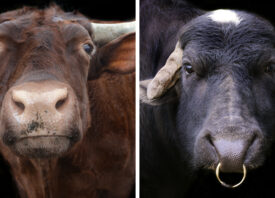
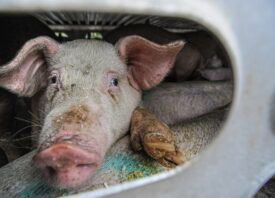
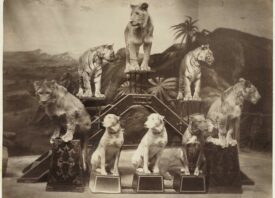
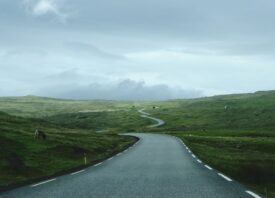
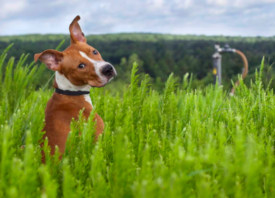
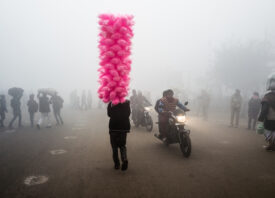
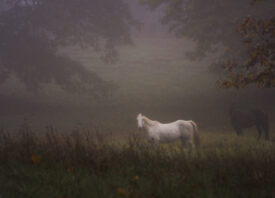
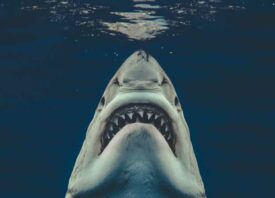
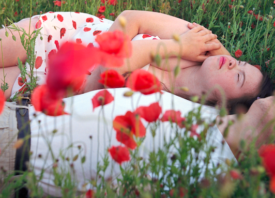
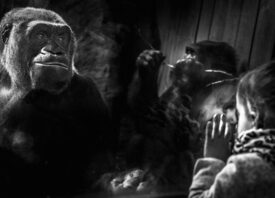
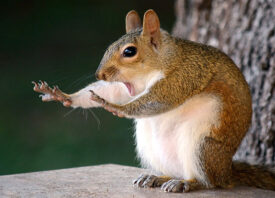
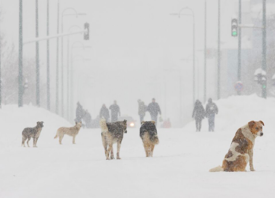
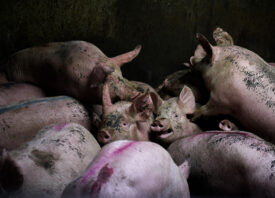
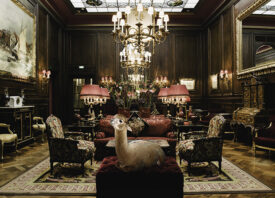
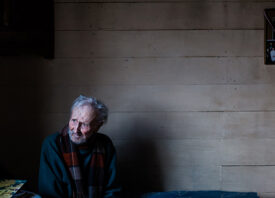
Michael Genovese’s newest body of work, Lines and Cracks and Zebras and Horses, is on view at OHWOW gallery in Los Angeles from January 12 through February 9, 2013.
Posts tagged as:
animal photography
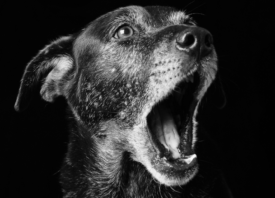
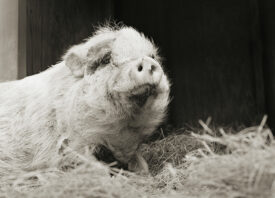
“Coming to Sarvey felt like coming home. The work that I produced there documents the delicate union that exists between humans and animals. These pictures were made with the intention to show the world an upclose view into the faces and souls of these wild animals. To look into their eyes as if looking into our own.”—Annie Marie Musselman
What would you do if you found an injured pigeon on the sidewalk? Would you photograph it? Would you look away and pretend you didn’t see it? Or would you call someone that might be able to save its life?
Annie Marie Musselman did the latter and that phone call resulted in her magical, award-winning series, Finding Trust.
In some ways, this series personifies everything a documentary photographer is not supposed to give into. In order to remain neutral and create unbiased photographs, most documentary photographers would most likely photograph the pigeon and move on.
However, Musselman takes a different approach as she was involved from the beginning of this series: first, by making that initial phone call to Sarvey Wildlife Center, an animal rehabilitation clinic, then by volunteering at the center while photographing the creature inhabitants and their caretakers.
As she says, she had a desire to “do something that mattered”.
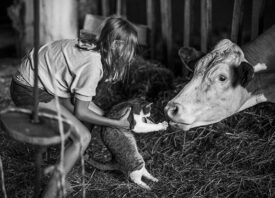
The human/animal relationship has always been complicated and mystifying. At one end of the spectrum you have the “bacon-infused everything” trend (“bacon” band aids, for example) and on the opposite end is this work by Musselman, where even the life of a pigeon — often referred to as “flying rat” — is something worth fighting for.
The process of rehabilitation takes amazing courage from these animals. Most have never come into contact with other people or do their best to avoid us as we encroach more and more on their forests and natural habitats.
As Musselman notes: “Finding Trust came from the feeling I get from the animals. I can see in their eyes that when we are helping them, they know it.”
Musselman makes such a simple statement with this work that’s almost impossible to ignore. Over and over she asks us to care. To feel empathy. To look in the eyes of the animals and to see that they too have feelings and should be respected.
Musselman does not remain neutral with this series. She has an agenda. As she writes: “I want so badly for humans to be kinder to animals in all aspects of our lives, and I feel that the more their beauty is exposed, the more people will see something like them inside their selves.”
Musselman is raising money through Kickstarter to help fund the publishing of “Finding Trust” in conjunction with Kehrer Verlag publishing in Berlin.
Anima is a series commissioned by the Corcoran Gallery of Art by Dutch photographer Charlotte Dumas that captures intimate portraits of burial horses of Arlington National Cemetary. Using only available light, Dumas photographed the horses in their stalls after a day of work.
Anima opens at Julie Saul Gallery in Chelsea on January 10, 2013.
Roberto Schena’s SP 67 is a book of photographs about being in-between. In between day and night, waking and dreaming, and the beginning and end of a journey. Schena spent three years documenting 13 kilometers of fog-shrouded, boar-filled forests between Italy’s Genoa and Calcinara.
The bulk of the images are sandwiched between two short stories by Paolo Caredda. The first, the narrative of a contemplative lieutenant guiding his troops through the woods parallels Schena’s subsequent imagery. In the second story, forming the epilogue, contemporary friends make discoveries on the fringes of city and wilderness. Long exposure images portray the motion of a frantic walk through the trees while still images capture the signs of life amidst the landscape. The sequencing of the photos is clever, carefully revealing the pace and timeline of Schena’s strange and unnerving journey.
Schena is an Italian fine-art photographer based in Milan. Published by Punctum this year, SP 67 La Strada Della Tramontana Scura (The Road of the Dark North) includes 51 color plates.
This post was contributed by photographer Greta Rybus.
For a series on the long and curious evolution of feathers, New York-based photographer Robert Clark visited several institutes of zoology and paleontology and museums of natural history located from Germany to China. The resulting photographs range from simple, elegant portraits of single feathers to snapshots of ancient fossils which document the past lives of some toothier ancestors of modern birds.
This post was contributed by Megan Ramirez.
Photo: Krista Steinke
Nemini Parco is an ongoing series by Spanish photographer Jesus Monterde exploring life and death. Nemini Parco, meaning ‘No one is spared’, was a common expression associated with the Dance of Death, an artistic genre during Medieval times symbolizing the universality of death, reminding people that death makes no distinctions as it unites all walks of life. Within this notion, Monterde also explores the ancient relationship between animal and man through the inhabitants of the remote mountainous region of El Maestrazgo, Spain. There, animals are known to be symbolic, a premonition or even a demoniacal messenger.
Monterde’s photographs follow both animal and man as they attempt to escape fear or establish control over their lives only to be reminded that what is done in life does not matter when death arrives and all become equal.
Nemini Parco is on display at Fauna & Flora Gallery in Newport, Wales through December 14th. This is the gallery’s debut photography exhibition.
This post was contributed by contributing editor Amanda Gorence.
Lottie Davies is a UK-born photographer who is based in London. Her series North features images from Iceland, Finland, Greenland, Svalbard (Spitzbergen), an Arctic archipelago that belongs to Norway, and the UK.
What can you tell us about your process of choosing locations? Were you on assignment or were they personal trips?
“It’s a mixture; mostly commissioned trips but some personal. Certainly quite a few were with Lonely Planet. Greenland was my first job with them and it was great. Remote, cold, a bit weird, just the way I like my travel! I’m attracted to the ‘far away’, anywhere where cellphones don’t work and you may need to sleep in a tent. It’s not that I enjoy being uncomfortable, it’s more that places which are hard to get to are less changed by humans, and I can imagine those landscapes being the same now as they were thousands of years ago. I like that.”
One striking thing about this series is how colorful the photos are when many photos of the Arctic are washed out grays or blues. Was this because of a certain time of year, time of day, and/or specific subject matter that you prefer to shoot?
“My visits so far have not been in winter, generally because it gets very dark later in the year and practical considerations make the warmer seasons a more sensible option. So, given I’m not there in snow season and if I’m lucky I get a clear blue sky, the sun can be gloriously bright, and the air and water are very clean and clear – hence more saturated colors. I like to use a polarizing filter to cut through the distance haze and bring the sky in.
“In Iceland there are volcanoes that spit out lava beds and peculiar colored mountains of rhyolite and other minerals. In some areas like Landmannalugar there grows a brilliant, bright green moss that makes the whole place look like an alien world; it’s fabulously beautiful.
“In terms of colors and subject matter, generally there isn’t much time on a travel assignment; there’s often a distance to cover and many things to shoot in a short time, so I try to pack everything in. I often get up before dawn to make sure that I have at least one shot of a landscape before the day’s weather comes in. If it rains the rest of the day, at least at dawn you always have a lovely soft cold light which I love. If it’s sunny later, then you’ve got two options, but often by then you’ve had to move onto a new place. I always think ’shoot it now, you don’t know if you’ll have another chance’.”
The above shot is stunning, where was it taken?
“It’s in Svalbard, in the Arctic Circle. I was on another ship traveling from Longyearben to Pyramiden, a recently abandoned Russian mining town which boasts the northernmost bust of Lenin in the world, at 79 degrees north. The water is incredibly clean and the wind was bitterly cold. We were served gin and tonic with glacier ice pulled up from the water about 10 minutes after I shot this. In Svalbard there is very little vegetation as it is so far north, so the striations you see in the mountains are in fact ancient seabed silt deposits which have become rock and been pushed up above the water by the movements of tectonic plates.”
What are the challenges that you have experienced shooting in locations with cold temperatures or limited light during the day? What are some of the methods you’ve used shooting in locations such as this?
“Cold temperatures are fine providing I have the right clothes. It’s taken me a while to work out my perfect kit, but lots of layers, thermals, and really thick socks are central to comfort. If I were to travel in winter I would have to watch out for frostbite and such, but I’ve yet to face those temperatures. Generally though, I’m more comfortable in colder climates, I don’t deal with heat and humidity terribly well (I’m a Welsh/Scots redhead so you can imagine I’m pale and burn in ten minutes).
“Camera-wise, I try to keep spare batteries warm, and lots of them, and have enough card-space to shoot all day without having to download. I like to keep the laptop and hard drives somewhere stable and safe during the day and download when it’s too dark to shoot. I shoot my personal work on film, which handles the cold much more easily than digital systems.
“My shoot in Finland was exclusively on 5×4 at -20 degrees and snow. For that trip, as I knew I would be shooting long exposures in cold temperatures, I took a Wista field camera made with brass and rosewood, which doesn’t freeze. My breath was making pretty frost patterns on the backplate which made it a little unusual for focusing, but apart from that it worked perfectly. No batteries, no electronics, just a box, a lens and a cable release; lovely. And I had my snow boots and Arctic parka – toasty warm all day.”
How much do you plan your itinerary and subjects when you are shooting on assignment and how much do you rely on chance or serendipity?
“A great deal of the time the itinerary isn’t up to me, it’s set by the commissioning magazine, but I do have some input. Mostly, the outline is set and within that I try to maximize the opportunities for chance to be in my favor. I use maps a lot, rather than satellite-navigation. I’ll look at a map of the country or area beforehand, have a look at where the mountains lie and which direction the sun sets, etc. You can never over prepare, because when you’re there, time and light are short and you need to maximize shooting opportunities. I will also ask local people where their favorite spot is, which is the best beach, the best restaurant, who is the most interesting person in the town, and so on. Local insight is invaluable.”
Can you share more about how you came across and photographed this scene?
“This is in a little place called Rodebay, in Greenland. Rodebay translates as ‘Red Bay’, and it is so-called because it was a big seal-hunting town and the blood of the seals would run down the rocks into the sea. Greenlandic dogs are working animals and spend their adult lives either chained up in the summer or working in the winter, but puppies run free for the first five months of their lives.
“The time I visited, there were masses of them jumping around being bouncy and furry. I came out from having lunch to find a group of them eating this seal head which they had stolen from a bucket on a boat; bloody paw prints everywhere. They were having a great time, but they got chased off pretty sharpish by the guy who caught the seal.”
Can you tell me more about the images of sheep in Iceland in the series?
“The latest trip I did was to Iceland in October of this year. It was great, a highlight of this year. Marcel Theroux, the writer, and I spent a few days with a group of Icelandic sheep farmers who round up their sheep on horseback every year, bringing them down from the mountains for the winter. We both spent some time on horseback ourselves, and really got to take part in the whole thing, which hasn’t changed much in a few hundred years. And the weather was just glorious; clear blue skies and shining sun for four days, so the amazing landscape was clear all around us.”
This post was contributed by photographer Laura Barisonzi.
An Incomplete Dictionary of Show Birds began with a very simple idea, that I wanted to photograph budgies. I met a great deal of people (mostly men) who were very knowledgeable about their hobby and only too happy to share it with me. Their enthusiasm became infectious so that by simply photographing a species I felt I was adding it to my collection.—Luke Stephenson
Luke Stephenson is a Britain-based photographer often recognized for his humorous and affectionate portraits of both animate and inanimate objects. He is represented by The Photographers Gallery in London.
An Incomplete Dictionary of Show Birds is his new book, featuring 60 color plates and available in four limited edition covers.
This post was contributed by contributing editor Amanda Gorence.
In 2010 Joan Costa captured these amazing photographs of Zooplankton in the Pacific Ocean while on the biggest expedition ever on global change and the ocean’s biodiversity (the Malaspina expedition). The zooplankton, usually too small to be seen with the naked eye, was photographed between Sydney and Honolulu.
Costa is a travel photographer who also works on personal projects in the realm of social reportage. He is represented by Anzenberger Agency.