Posts tagged as:

travel photography

lonnekevanderpalen_Photography

We recently talked to Netherlands-based photographer Lonneke Van Der Palen about her unique style and approach to photography.

lonnekevanderpalen_Photography

What project best represents your photography?
“I’d say that my series Souvenir: memories of a journey never made is the best example. This project was informed by a very personal point of view, and while working on it I didn’t have to conform to anyone else’s opinions. The iconic approach, to both people and objects within the series often poses as an example for me when I work on new projects. You could say that all my work can be linked in one way or another, to Souvenir.”

lonnekevanderpalen_Photography

lonnekevanderpalen_Photography

Your style is really cohesive, how do you manage to keep a personal and recognizable vision also in commissioned works?
“I think that the creative process of an artist is connected to personal tastes and a personal vision. I feel this should always be reflected in one’s work. That way, no matter how different one commissioned series is from another, you will always be able to recognize a certain personal edge to everything one makes.

“In my case this is strongly dependent on certain choices I make. I feel like I have found a way to approach objects that is very much my own. I also have a very particular way of working with colors and light within my projects. That personal edge is what clients are looking for when they enlist me.”

lonnekevanderpalen_Photography

I like that Souvenir feels like I’m looking at a place that isn’t anywhere. Tell me more about the project.
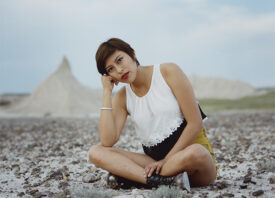
“The series is the result of a staged journey inspired by the ultimate clichés among travel photography. The posing in stunning landscapes, sunsets, wildlife, exotic food, the indigenous population: they almost become icons.

“By recreating these images, photography enables me to visit distant worlds and gather souvenirs of a journey that has never been made. Why buy expensive flight tickets, when I can accomplish the same with my imagination? Using a camera, I don’t have to leave my house to experiences life’s visual marvels.”

lonnekevanderpalen_Photography

lonnekevanderpalen_Photography

This post was contributed by photographer Martina Giammaria.

Malka_Oppermann_Photography

Throughout the trip, the only consistent form of structure was the company of one another. Time became elastic and weeks departed from what our knowledge of what a “week” meant. As a result, we have collected an array of photographs which emote our sense of constant displacement yet express a deep love of travel and discovery.—Yael Malka and Cait Oppermann

After their recent graduation from Pratt Institute, Brooklyn-based photographers Yael Malka and Cait Oppermann backpacked for 70 days through Turkey, Morocco and several countries in Europe. The photos they took during that time are now collected in their self-published book Sea Blues.

Filled with idiosyncratic extractions from the artists’ journey as well as portraits of one another, Sea Blues is a collaboration between friends. These are notes from the road, a traveler’s handbook that allows the viewer to share in the amazing freedom of summery vagabonding in strange lands.

A book launch will take place at Molasses Books in Brooklyn on May 17, 2013.

cait

Yael

Malka_Oppermann_Photography

Malka_Oppermann_Photography

Malka_Oppermann_Photography

Malka_Oppermann_Photography

Feature Shoot Contributing Editor Matthew Leifheit is an independent writer, curator, and photographer based in New York City.

The-black-seaThe Black Sea photographed by Gareth Phillips

The topic for the next Feature Shoot online group show will be beach vacation photos.

Photographers are invited to submit images and captions to:
submissions@featureshoot.com

Up to five images can be submitted (480 pixels wide, 72 dpi, saved for web under 65kb). The deadline for submissions is April 15, 2013.

photoville fence

noel camardo

Throughout the history of photography, many photographers have set out by car to explore the U.S. It has almost become a right of passage. Brooklyn-based photographer Noel Camardo is no exception. U.S.A. is his recent project in which he attempts the great American roadtrip; his journey and lens capturing a neutral and unassuming look at the paradoxes he found along the way.

Noel_Camardo_photography

Noel_Camardo_photography

How important was it to use a car to explore the country, and how did this play a role in the journey?
“Driving is an integral part of many Americans’ lives. I’m interested in the way people take in the landscape they occupy, leading me to take a lot of photographs while driving. The car is also an indispensable part of my travels. I generally start the day driving until I get a feeling my location is interesting, and than I park and walk for an hour or two, repeating this process throughout the day until it is dark.”

Noel_Camardo_photography

Whether it be a planned or photojournalistic approach, to me all good photography must incorporate the ‘decisive moment’, where everything aligns within the frame. What are you looking for, and what are you hoping to communicate by the moments you choose to photograph?
“My thought process while taking photographs is about what to include in the frame, and how to tie the frame together so that there is tension within the frame that holds the viewers attention long enough for them to look at what I am showing them. Camera focus, exposure and composition are all pretty much second nature during the process. While photographing I have no hesitation between my brain and the camera shutter, I follow the subtlest instincts to take a photo.”

Noel_Camardo_photography

How would you summarize this time period in US’s short history?
“Traveling the country I repeatedly came across social centers that had shifted into parking lots, main streets that had disappeared in the wake of big-box stores, and a country where soda has become cheaper than water. I encountered figures that walked with their heads hung low past a landscape covered in signs for credit repair, CEO Income from Home, vasectomy reversal, cigarette sales, fast food, and liquor stores.

“At a moment where obesity is at an all time high, it’s often hard to find a meal cooked by humans and not machines. For a country with vast monetary resources, natural wonders, ethnic diversity, an entrepreneurial spirit, freedom of expression and thought, the country appears to be falling short.”

noel camardo

Is this work an ongoing project?
“The U.S.A. photographs are an ongoing project. My goal is to show them in a book for future generations to reference this time period.”

Noel_Camardo_photography

This post was contributed by photographer Mark Hartman.

Budapest-thermal-bathPhoto: Rubén Salgado Escudero

steph-goralnick instagram

Steph Goralnick is a photographer, designer, event planner and all around creative gal based in Brooklyn. We asked her a few questions about her Instagram popularity (she has over 200,000 followers) and the opportunities this has provided.

You make a living as both a photographer and a graphic designer. Can you talk a little about how you got started with Instagram and what it has meant to both your career and your creative process?
“My iPhone had replaced the other camera that I was carrying as an everyday point-and-shoot when I didn’t have a DSLR with me, and for a long time I was looking for an appropriate platform for sharing quick on-the-go daily visual updates. And then suddenly, one appeared before me!

“Despite the addition of a new outlet, my creative process has remained the same: to always have a camera with me in order to be constantly composing, shooting, documenting things that I find amusing, and sharing them.

“In terms of my career, Instagram turned out to be a great way to reach and connect with a new audience; and as a result of that, open up new unexpected opportunities.”

steph-goralnick instagram

At the time of this article you have over 200,000 followers with each image averaging 3,000-4000 “likes” and sometimes hundreds of comments. Why do you think people are so attracted to the images you make?
“As with any photo sharing or social network that I use, I aim to publish with the idea of making it palatable for onlookers to consume: I try to update every day, though with only a couple posts a day, and I rarely post several photos in a row of the same thing.

“While I can’t speak for other people, I like to shoot and post images of people, places, or things that I find captivating, and try and share a little bit of the story behind them. If I created or edited a photo in a way that isn’t immediately obvious, I generally make a note about how it was made. In my mind, these are things that would make someone else’s post more interesting to me, so perhaps it makes mine more interesting to other people.”

steph-goralnick instagram

You’re very open about your image making process by explaining what apps you used, how you got a particular effect, and engaging with your followers via the comments section. Why is it important for you to communicate with your followers and do you think this plays a role in your popularity?
“I like to let people know that I actually do read and see every single comment, and the only way I know how to do that is to engage and respond to questions. I find that when people have a little bit of anonymity and think that nobody is looking, it leads to more hurtful, hateful, randomly nonsensical comments, shouting, and spam.

“The Instagram interface isn’t the best format that is conducive to conversations, but I try to create an environment that encourages actual interaction between people rather than spam and shouting nonsense. While there is still a lot going on, cutting down on the clutter has allowed space for me to talk to (or even eventually meet) some amazing folks.”

steph-goralnick instagram

It seems that for certain photographers like yourself the platform has got the attention of advertisers and brands looking to capitalize on your popularity. What do you think brands are looking for when hiring a photographer they found through the app?
“I think many brands are after captive audiences to capitalize upon. While I do think there are fantastic organic ways to lend an artistic voice/eye to some brands’ vision in a way that is still compelling to followers, I think it’s an incredibly fine line between that and force-fit that shoves advertising down people’s throats.

“I think different organizations and agencies are looking for different things. Some are looking for a ‘guest artist’ to do a take-over of their official stream, which I think is a great way to generate new and exciting content, tell a story, and lets followers ‘opt-in’. It makes for a more engaged and connected audience, rather than people feeling put-off by advertorial content.

“Another great fit are tourism boards who hire photographers to travel around a city or country and do what they would normally do while traveling (which is most certainly to post photos). The photographer gets a wonderful job being paid to shoot in a new place (which we love!) and the client benefits from viewers exploring the location tag.”

steph-goralnick instagram

Can you talk specifically about some of the projects that have come your way through Instagram?
“One I really enjoyed was this past April when the New York Rangers were in the NHL playoffs, Delta (who is a sponsor of Madison Square Garden) was looking for a unique way to engage with fans online during the game, as well as develop some kickass content for their official Instagram account.

“They hired myself and five other photographers using Instagram to cover the game from our own perspective. We were treated to all-access of MSG, from the control room up near the ceiling, to the penalty box during warmups, to Delta’s swanky box suites, to choice seats right behind the goalie.

“Photography jobs during high-energy events where you meet great people, are trusted to execute your own vision, and have access to something you normally wouldn’t are the best gigs.”

steph-goralnick instagram

You recently got back from a trip to Israel on an Instagram tour. Can you talk about this experience and how it came about?
“It was a project called Once In a Lifetime HD, created by a group of students at Tel Aviv University funded in part by the ministry of tourism of Israel. Their goal was to show the world there were aspects of their homeland that went beyond political strife; that everyday life happened, that there was beauty and humor and history. They selected 10 Instagram users, including myself, and flew us over on a 10-day trip to sites and places that they personally found to be beautiful and captivating.”

steph-goralnick instagram

What advice would you give fellow photographers looking to start using Instagram in order to grow their business?
“Building an audience takes time, and a lot of work. Though photographers have been embracing social media for a long time now, so I’m sure that comes as obvious to most people. I think one thing we have to avoid is posting the same image in a blitz out to five different networks.

“Use instagram as a way to drive traffic to your blog or site. Take an intriguing behind-the-scenes shot with your iPhone during your next shoot or project. Once the final work goes live, post to Instagram encouraging folks to check out your site or blog to learn the full story about what’s going on, or to see the final image.”

steph-goralnick-instagram12

This post was contributed by photographer Roger Kisby.

Coogee-BeachCoogee

These images are concerned with the interplay of the familiar and the unfamiliar. Instantly recognizable locations but shot with with long exposures at a particular time of day to create an unfamiliar and ethereal effect. The lack of people and the strange quality to the pool images invites the viewer to enter the dreamlike place of the images for a moment, and maybe consider what is unknown in themselves. What beauty lies undiscovered given the right perspective and moment of inquiry.

Shot over the period of a year this series of images covers 11 of the over 30 tidal pools dotting Sydney’s Shoreline. I also like the metaphor of the tidal pool, a place of safety and calmness amongst the wild unpredictability of nature. A place to rejuvenate in safety and watch the waves crashing outside.—Steve Back

Steve Back is a Sydney-based commercial and fine art photographer. His second exhibition of landscapes, Terra Incognita, that explore the same theme of the “unfamiliar familiar” will open at Global Gallery in Sydney on October 24, 2012.

Bronte-Beach Steve Back PhotographyBronte

Bilgola-Beach Steve Back photographyBilgola

Bondi-Beach Steve Back photographyIcebergs, Bondi

Collaroy-Beach Steve Back PhotographyCollaroy

Maroubra-Beach Steve Back photographyMahon Pool, Maroubra

Dee-Why-Beach Steve Back PhotographyDee Why

North-Narabeen-Beach Steve Back photographyNorth Narabeen

Lindsay-Mackenzie photography

Lindsay Mackenzie is a photojournalist currently based in Tunisia.  She has spent the last two years in the Arab world documenting the revolutions and aftermath. However, her interest in the world was fueled by first working as a tour guide.

How and why did you decide to be a tour guide?
‘I was living in Vancouver in 2007, working as a researcher at a university. But I was looking for a job that engaged with the rest of the world in a more tangible way. I worked as a full-time Tour Leader for three years, leading about 450 people through 18 countries.’

Lindsay-Mackenzie photography

What was your best and worst experience during this job?
‘My worst experience was working with a student group that had 26 passports stolen in Quito, Ecuador, twelve hours before we were supposed to put all the students on a plane back to the United States at the end of a 3 week trip. After having the passports stolen, we went to the US embassy to get a letter to help us travel without passports, and on the way there, we were almost mugged again. That was a very long day.

‘There is no single best experience but there were certainly many days where I would be, for example, wandering around Havana or hiking on a Greek island and I would forget that I was working. That always feels like a real privilege.’

Lindsay-Mackenzie photography

Lindsay-Mackenzie photography

Did you have a photography career in mind while working as a guide?
‘I’ve always wanted to be a photojournalist and have been interested in international news and in communicating about global issues. But for a long time, I didn’t take the jump to work full-time in photojournalism because I’d read too many articles about the death of photojournalism and how impossible it is to make it as a photographer today. It took me a long time to finally jump in and make the transition to photojournalism.’

Lindsay-Mackenzie photography

‘I realized as I was leading tours that I wanted to spend more time in less places and to engage with the people. In Greece, on one of the last tours I led as a full-time tour leader, I remember that I had a tour to organize but there were protests going on at the same time in Athens and all I really wanted to do was to photograph and to understand the protests. So that’s when I decided it was time to switch to photography. After that I did an MA in Journalism and moved to Tunisia at the beginning of the Arab Spring.’

Lindsay-Mackenzie photography

Lindsay-Mackenzie photography

You still lead tours. How do you balance that with assignments?
‘I stopped tour leading for about two years in order to finish my MA and to give myself space to make the transition to photojournalism. That’s my first priority. But now I teach photography and lead trips in the summers for National Geographic Student Expeditions.

‘I’d like to work towards leading trips for two to four months of the year and then having the rest of the year to focus on photojournalism. Sometimes the two can be complementary: maybe you are assigned to lead a tour in Egypt and you also have a story you want to do there, you can lead the trip and then stay afterwards to do the story.’

Lindsay-Mackenzie photography

Lindsay-Mackenzie photography

What are your plans for the future?
‘I’ve spent the last two years focused on the Arab world and on the revolutions and transitions, particularly in Tunisia and Yemen. I’d like to push myself to broaden my coverage to under-reported issues and to focus on more long-term projects rather than following breaking news and shooting stereotypes.

‘I started a short story in Algeria in May and would like to go back if I can get a visa. And I’m trying to organize something in West Africa for later this year.

‘For tour leading, I’d like to keep leading tours for a few months each year. I keep pushing to get a student travel company to launch some tours in the Middle East and North Africa so that young Americans, in particular, can have a better understanding of that part of the world. It is one of my goals to one day see American high school students spending their summers in Lebanon and Tunisia and Iran. And I plan to keep adding to this personal photo project about group tourism, to try to capture how bizarre that world can sometimes be.’

Lindsay-Mackenzie photography

This post was contributed by photographer Alex Potter

Jonathan May Africa photography

Jonathan May is an advertising and fine art photographer originally from Australia. He is currently based in Moscow but lately finds himself spending majority of his time shooting in Australia and Africa.

His project L’Afrique materialized from an assignment in Africa from a French client. The project includes images from from Burkina Faso, Ivory Coast and Kenya but Jonathan plans more visits to West Africa/Francophone speaking countries in the future.

Jonathan May Africa photography

Jonathan May Africa photography

Were you traveling on a specific assignment while shooting this, how do you manage to shoot personal work at the same time?
‘I have been sent to Africa on specific assignments. The beauty of these assignments is that I get a chance to travel around the whole country and cover the client brief as well as capture some of the more unseen and intimate scenes in my personal style.

‘I love exploring new places and meeting locals that make it so much more special. I usually end up changing my plane ticket and staying on longer so I can really focus on my personal work and really delve a little deeper.’

Jonathan May Africa photography

Your shot of the man in traditional dress holding a spear with cattle in the background is a beautiful shot, was there a story behind this shot?
‘This is a warrior from the Masai tribe. I was very fascinated by their traditions and culture.

‘He told me that to prove himself as a man he had to endure a public circumcision at 15, in front of the whole village. If he squirmed or winced in pain he was considered weak and would lose respect amongst his peers. In which case he would have to spend around two to three years living in the bush and learning the survival methods from his elders. Learning how to use plants and herbs for medicine and the hunting techniques. He would then have to kill a lion with just his spear and return to the village with the lion’s mane, and not everyone survives this confrontation. I wanted to capture his strength, pride and serenity that he feels with the land around him.’

Jonathan May Africa photography

The diptych of the two butchers against red cloth is great, especially the inclusion of hands holding the backgrounds, did you originally intend to include that in the photo or were you planning on cropping it out? When you are shooting projects like this what approximately percentage of your shots are things that you planned vs shots that just happened unexpectedly?
‘Nine times out of ten the shots are unplanned. I usually just look for interesting people in striking locations, but this one was different. I planned to visit the abattoir and knew the butchers would be covered in blood. So I was prepared to use red background. My initial thought was to crop out the hands and make it quite simple and classic, but afterwards I changed my mind and just thought the hands added another dimension to the photo, rawness which is exactly what the butchers’ job entails.’

Jonathan May Africa photography

What’s the story behind the guy with the snake wrapped around his head and in his mouth?
‘I met this man when I was in Mombassa and he was hassling me to visit his reptile park. I finally succumbed and was happy I did so.

‘After a reptile is caught at the airport being smuggled out of the country to be sold on the black market, it would end up here and he would take care of it. He had a big collection of Black and green Mamba snakes, huge spiders, massive turtles and even alligators. I am really not sure why anyone would want to buy a black mamba snake…..but this is Africa.’

Jonathan May Africa photography

What about the sequence of shots of men tied in grass?
‘Many African societies consider masks as mediators between the living world and the supernatural world of the dead, ancestors and other entities. Masks became and still are the attribute of a dressed up dancer who gives it life during ceremonies.

‘The grass is woven over the entire body to form a mask. These photos were taken during a funeral procession in Bobo-Dioulasso, Burkina Faso. The masked men danced around, whipped people and scared the children as part of their ceremony.’

Jonathan May Africa photography

Even though your shots cover a lot of different places and include photos of both posed portraits, more candid shots of people where they almost don’t seem to know you are there and objects of daily life you seem to really capture a mood with details of everyday objects, houses and interiors. How would you define what it is that you look for in a subject?
‘I am really trying to focus on finding the beauty in everyday life in Africa. People, places and things that most of us would just walk by and not even register.’

Jonathan May Africa photography

What are some other stories or experiences that stay with you from shooting this project?
‘The shot of the chimpanzee smoking. At the end of the day shooting a client assignment, my guide wanted to show me something special and he thought I would like his surprise. He took me to a rundown zoo, with no animals in the cages.

‘In the very last cage there was an old, tired chimpanzee. Our guide handed the chimp his cigarette and made him smoke it. It was quite a disturbing and sombre moment for me. Seeing the chimp with his fingers wrapped around the cigarette, looking so human… it was eerie and sad at the same time.

‘At first I was a little stunned and couldn’t bring myself to photograph the moment. I decided that it needed to be shared so I changed my mind. I ended up visiting him twice more before I left Africa, bringing him food. Unfortunately there was nothing more I could do for him.’

Jonathan May Africa photography

This post was contributed by photographer Laura Barisonzi.

euro_disney_Tim JohannisDisneyland Paris by Tim Johannis

Keelung-Yehliu-Park,-Taiwan by Dragos BardacYehliu Geological Park,Taiwan by Dragos Bardac

3_Pskov, Kremlin_Ekaterina_VasilyevaPskov Kremlin, Russia by Ekaterina Vasilyeva

Angkor Wat, Cambodia_David Graham1Phnom Bakheng, Cambodia by David Graham

Arlington National Cemetery Sean-ScottArlington National Cemetery, Virginia by Sean Scott

Bryce Canyon, Utah_Ahmer InamTaj Mahal, India by Ahmer Inam

The Whale Shark Tank, Atlanta, GA by Kyle FordGeorgia Aquarium, Atlanta, GA by Kyle Ford

Great Sand Dunes National Monument_AARON FALLONGreat Sand Dunes National Monument, Colorado by Aaron Fallon

Man-Cheung-SaachPass-IndiaSaach Pass, India by Man Cheung

National Civil Rights Museum. Memphis, by Jeremy LangeNational Civil Rights Museum, Memphis by Jeremy Lange

Aline-Smithson_ScientologyLos Angeles Church of Scientology, California by Aline Smithson

The London Eye_Alex KorolkovasChichen Itza, Mexico by Alex Korolkovas

Versailles Castle_albert bonsfillsPalace of Versailles, France by Albert Bonsfills

paul_bunyan Bemidji-MD tim_kahnPaul Bunyan’s Animal Land, Minnesota by Tim Kahn

Louve by Anthony GeorgisMusée du Louvre, Paris by Anthony Georgis

Bald-Knob-Cross,-Alto-Pass,Vincent GlielmiBald Knob Cross of Peace, Illinois by Vincent Glielmi

Janice-Aitken_LaDefense_5Moretti Chimney, Paris by Janice Aitken

 Monserrat Monastery, Catalonia, Spain by Juan Madrigal Santa Maria de Montserrat, Catalonia, Spain by Juan Madrigal

Mount Pinatubo in the province of Pampanga Veejay VillafrancaMount Pinatubo, Philippines by Veejay Villafranca

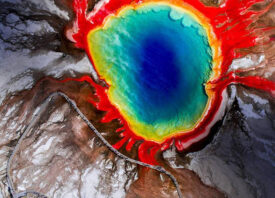
Yellowstone-National-Park Kimberly MufferiYellowstone National Park by Kimberly Mufferi

TierraSanta_LucyWilliams-00Parque Tierra Santa, Buenos Aires by Lucy Williams

Alex-Brown-Macchu-PicchuMachu Picchu, Peru by Alex Brown

*This show was curated from reader submissions.

If you’re a photographer, you can now promote your work, new series, website, gallery show, etc. on Feature Shoot for a very affordable price. Find out about becoming a Spotlight Photographer here.