Posts tagged as:

nature photography

Andre Ermolaev

Russian photographer Andre Ermolaev captures nature’s mix of beauty and pattern in his aerial photographs of rivers running through volcanic beds in Iceland. Iceland is home to nearly 30 active volcanic systems. Ermaolaev not only explores this complex terrain, but he creates photographs that double as abstract pieces of art.

Andre Ermolaev

Andre Ermolaev

Andre Ermolaev

Andre Ermolaev

Andre Ermolaev

Andre Ermolaev

via Colossal

Couroupita-guianensisCouroupita guianensis

Flower, the latest collection of photographs by Andrew Zuckerman, continues the conservation-minded work that the prolific photographer began in his previous tomes, Creature (2007) and Bird (2009). For his latest project, Zuckerman photographed over 150 beautiful botanicals, investigating species both exotic and familiar. True to Zuckerman’s distinctive style, each photograph is minimalist in nature, showing a subject in isolation against a blank field. In this way, our attentions are drawn solely toward his unique and beautiful flora subjects.

Andrew Zuckerman is an American filmmaker and photographer based in New York City. Flower was published by Chronicle Books this year, and it includes 300 pages of full-color photographs.

Calathea-burle-marxii-'IceCalathea burle marxii

Passiflora-incarnataPassiflora incarnata

Miltoniopsis-hybridMiltoniopsis hybrid

Calotropis-giganteaCalotropis gigantea

Caiophora-lateritiaCaiophora lateritia

Strongylodon-macrobotrysStrongylodon macrobotrys

Datura fastuosaDatura fastuosa

Tweedia-coeruleaTweedia coerulea

Pseudobombax-ellipticumPseudobombax ellipticum

Nymphaea-'Key-Largo'Nymphaea ‘Key Largo’

This post was contributed by Megan Ramirez.

Doug Kofsky

Nameless Tower is an image from Doug Kofsky’s first solo exhibition, Mountainscapes, currently on display at Art 101 in Brooklyn through December 22, 2012. Kofsky takes us through the remote Himalaya of Nepal and the Karakoram Range of Northern Pakistan.

[Alt-Text]

Paula McCartney

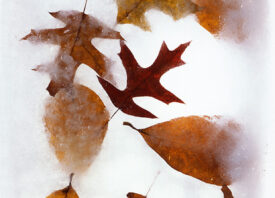
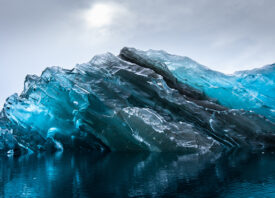
I see winter everywhere, in every environment, in every season, and categorize it by pattern, shape and line rather than merely by substance.—Paula McCartney

A Field Guide to Snow and Ice is Minneapolis based photographer Paula McCartney’s interpretation of winter. She combines images of true snow and ice with forms that mimic these substances; snowfalls, frozen waterfalls, wildflowers, gypsum sand, and snowdrifts. These natural structures become reinterpreted and reimagined, taking on properties both literal and abstract.

[click to read…]

Magdalena-Wasiczek

Magdalena Wasiczek is a photographer living in Trzebinia, Poland. Her macro photographs reveal the magic, mood and whimsy of the natural world in a style unique to her own. She recently received the International Garden Photographer of the Year award, honored by the world’s premier competition for garden, plant, flower and botanical photography.

Magdalena-Wasiczek

Magdalena-Wasiczek

Magdalena-Wasiczek

krista-steinke photographyPhoto: Krista Steinke

Yu-Yamauchi sunrise

For five months a year over a four-year period, self-taught fine art photographer Yu Yamauchi captured these amazing and ever-changing sunrises from the same spot near the summit of Mt. Fuji (10,000 feet above sea). Yamauchi lived in a hut on Mt. Fuji, considered one of the most sacred mountain in Japan, for a total of 600 days, waking at dawn to photograph these magnificent and ethereal sunrises.

Yamauchi writes,

This space, “above-the-clouds,” exists far from the ground where we live our daily lives. It is also a space between the earth and the universe. Being there simply reminds me of the face that we live on the earth which is a planet within an infinite space of the universe.

Changing shapes with every second, the clouds look like a membrane of the earth. When the sun rises behind a cloud-forming horizon, the world pained in only blue before suddenly and completely looking different. I witnessed many times this magical transformation.

DAWN, is currently on view at Miyako Yoshinaga gallery in New York through November 21, 2012 and Yamauchi will be giving an artist talk about the work on November 1, 2012 at 7p.m.

Yu-Yamauchi sunrise

Yu-Yamauchi sunrise

Yu-Yamauchi sunrise

Yu-Yamauchi sunrise

Yu-Yamauchi sunrise

Yu-Yamauchi sunrise

Yu-Yamauchi sunrise

Yu-Yamauchi sunrise

Yu-Yamauchi sunrise

Yu-Yamauchi sunrise

via Spoon & Tomago

botanicals William-Rugen

William Rugen is a Seattle based photographer. Known for his projects “Western Dioramas” which explores man’s relationship with the vast American west, and “Consumed” in which he documented every single thing he ate over the course of one year, his most recent project “New Botanicals” was exhibited at Seattle’s Core Gallery in the spring of 2012.

botanicals William-Rugen

Can you please introduce us to “New Botanicals”?
“New Botanicals” is an homage and graphical update to the classic botanical prints from the 18th and 19th century. I have a background in biology and have always had an affinity for scientific illustrations.

“There is a great cross-pollination (no pun intended) of art and biology in those prints that I wanted to somehow capture. I was trying to find a balance between the grace of the visible plant and the mechanics of its growth engine, the roots. I like the idea that this amazing object could not exist without the inelegant tangle that is just out of sight. It is a reminder that everything of beauty or value requires a certain amount ‘ugliness’ to come to fruition.”

botanicals William-Rugen

Can you tell us a bit about your process? How did you go about making these images? Did your artistic approach change or evolve over the course of the project?
“Although there is a heavy digital component to this work, I tried to photograph the plants as a finished product. First they were carefully selected for shape and condition, then the roots were exposed and cleaned with a thorough washing (taking anywhere from 5 minutes to an hour), the plant was suspended in front of a colored sweep and carefully pruned and physically manipulated in an attempt to match the look and feel of a botanical print. I had to work fairly quickly during the portion as the plants can only take so much abuse before it starts to wilt. The file was then moved into photoshop where the background color was flattened and a mask of the plant and roots was created.

“Finally, if the plant survived the ordeal, it ended up in my wife’s garden. Survival rate was around 60%.

“The look of this work stayed basically the same from the first time it appeared in my head until it ended up on the wall.”

botanicals William-Rugen

“New Botanicals” seems to be a departure from your earlier work, both stylistically and with regards to subject matter. I’m curious how you see it fitting in with your earlier work like “Western Dioramas” and “Consumed”?
“I previously had a different career for 20 years and was finally done-in by the sameness of every day. Because of that I very consciously look to work on different subjects, letting the ideas and subjects inform the style. I use digital and film, “straight” photography and heavily manipulated images, I have some ideas for a more traditionally shot and printed landscape project as well some multi-media work with photographic prints as the base. I think the one thing that does carry through the different work is a very graphic basis. There is a certain use of strong form and elements in most of my images.”

botanicals William-Rugen

What are you working on now? What is next for you?
“I am continuing to work on “New Botanicals” and “Western Dioramas”. I am also working very slowly on a project called “Harbinger” about how small and innocuous everyday occurrences are being purposefully distorted and manipulated by politicians and media to push their agendas by adding to a general underlying dread and unease in the general public.

“I am also a very avid user of instagram (user name brugen), I find it to be a great way to always be thinking about pictures and composition.”

botanicals William-Rugen

This post was contributed by photographer Adam Smith.

If you’re a photographer, you can now promote your new series, website, gallery show, recent assignment, etc. on Feature Shoot for an affordable price. Find out about becoming a Spotlight Photographer here.

Torkil-Gudnason flower photography

I’ll glance out the window of my studio, and see a flower blooming in a most surprising place. Such a contrast—like magic. I think about how the flower got there and how it survives, how strong flowers are.—Torkil Gudnason

New York City based and Denmark born photographer, Torkil Gudnason, came to the United States in 1978 and immediately began working with and assisting photographers in the world of fashion. His most recent works explore the contemporary natural world through the use of exaggerated lighting and color within the context of the still life photography. An opening of this body of work, Electric Blossom, is currently on view at Edelman Arts in New York.

Torkil-Gudnason flower photography

Torkil-Gudnason flower photography

Torkil-Gudnason flower photography

Torkil-Gudnason flower photography

Torkil-Gudnason flower photography

Torkil-Gudnason flower photography

white lions karine-aigner

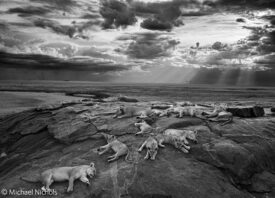
Karine Aigner is a wildlife photographer and former Senior Photo Editor for National Geographic Kids magazine. Her series White Lions features these animals which exhibit a rare color mutation of the Kruger subspecies of lion.

white lions karine-aigner

Where were the shots taken? If it is a zoo or game farm, you do a great job of making it feel wild. Is that something you try to do, and if so, how do you accomplish that?
‘The shots were taken at a wildlife park in South Africa. I shoot a lot in captive situations. Most of the time, the idea is to make it feel as wild as possible — given that it’s not.

‘The challenge for me is to attempt to capture the wild spirit of the animal if possible, and to give them the dignity that they might have had if they had been born and bred in the wild.

‘I try and wait for a look, a pose, a behaviour, something I know that is innate, that resonates where these animals are supposed to be. In this particular situation, these lions were born and bred for a captive existence.’

white lions karine-aigner

‘As a photographer, trying to tell a story, your decisions become very important. Do you include a pole? Or exclude it? Do you shoot at 2.8 to blur the background as much as possible? Or is there something behind the subject that is more important than the background and requires more aperture? How do you capture a true and natural behaviour when there is nothing natural about the situation? Are you shooting through a fence?

‘With most all of my captive work, my main goal is to make the picture with the end usage in mind. In this situation, there were two goals: the idea was to try as much as possible to make the lions look as they would in the wild, as well as to give each animal a character, so the audience could identify with them and care about them.’

white lions karine-aigner

Were there trainers with you while you were shooting, and if so, do you just observe or do you ask them to try to initiate certain behaviors?
‘These lions are all captive born and bred. They are born in the park, taken away from their mothers, and hand raised.

‘Since the animals are hand raised, they are accustomed to people. The handlers acted as a barrier between me and them, but ultimately they are wild animals, and I was taking a chance being on the ground with them. They were curious about me and the cameras. They grouped together when the handlers stood between us and finally sat down. Almost like a wild pride of lions.

‘I just observed. That’s the best way to capture any behaviour that looks natural. These images were taken over a period of several days, and each situation was different. Some images were shot from a vehicle, some not.’

white lions karine-aigner

Were the white lions harder to shoot than other large cats?
‘An animal is an animal and each animal has its own personality. Once you learn to read behaviour, it helps your photography and you might be able to anticipate what will happen next and be ready for it.

‘But in the end, any animal can be unpredictable. Photographing white lions in captivity is no different than shooting leopards in captivity. In the wild, the two cats are a bit different in behaviour. In captivity, some behaviours change. But sometimes a cat is a cat. A big lion has many of the same qualities as your small housecat.’

white lions karine-aigner

I don’t think most people think about the fact that most of the images they are seeing of the big cats are actually in captivity. What do you think is the future of big cats in the wild?
‘The big cats of the world, from lions in Africa to Snow Leopards in the Himalayas, need help. Their numbers are dwindling due to habitat loss and conflict with humans. This is a very serious problem.

‘There are more tigers in captivity than there are tigers left in the wild. This is a sad, but very real situation. I urge you to take a look into some of the conservation efforts happening around the world. I make a shout out to National Geographic’s BIG CAT Initiative.

‘It won’t be long before the only pictures of these fantastic animals are ones of captive animals. And while I take pride in making beautiful portraits of the creatures in captivity, it would make me very happy to never again see a big cat in an enclosure and only be able to see them in the wild, where they belong.’

white lions karine-aigner

This post was contributed by photographer Laura Barisonzi.

If you’re a photographer, you can now promote your new series, website, gallery show, recent assignment, etc. on Feature Shoot for an affordable price. Find out about becoming a Spotlight Photographer here.