Posts tagged as:

food photography

lottie hedley photography

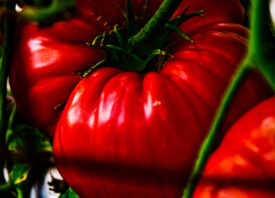
A little over a year ago, after exchanging letters, I spent my first stint on the Hilty farm in Smyrna Mills, Northern Maine. This is a work in progress which I hope to expand to include other farms and businesses which operate in a way so as to encourage stewardship and sustainability.

In the Hilty household life works in circles. Food at meals is passed around the table in a clockwise circle; while questions regarding the morning’s bible reading come around the table in an anti-clockwise direction. The seasons impress their own circular influence on the family’s market gardening business and their method of farming cycles the soil through a process to ensure the soil is enriched rather than stripped. Perhaps most importantly, the family’s philosophy on farming for the future generations speaks to an over-arching cycle.

The Hilty family are part of a burgeoning sustainable farm movement. They believe the Lord intended us to be stewards of the land. Their philosophy is to work with the land instead of against it so their children don’t have to find answers for the problems they’ve created by farming the land to excess.—Lottie Hedley

Lottie Hedley is a lawyer turned photographer from a dairy farm in New Zealand who is currently searching for the meaning of community through photography. Having left her job in corporate law in London at the end of 2009, Hedley attended the professional certificate program at Maine Media College in Rockport, ME and recently finished up an internship at VII Photo Agency in New York City. She is currently based in London.

lottie hedley photography

lottie hedley photography

lottie hedley photography

lottie hedley photography

lottie hedley photography

lottie hedley photography

lottie hedley photography

lottie hedley photography

lottie hedley photography

lottie hedley photography

lottie hedley photography

This post was contributed by photographer Alex Potter

If you’re a photographer, you can now promote your new series, website, gallery show, recent assignment, etc. on Feature Shoot for an affordable price. Find out about becoming a Spotlight Photographer here.

Yumiko-Utsu photography

Grotesque yet utterly intriguing, Japanese photographer Yumiko Utsu’s work enthralls the viewer with playful constructions of fruit, dismembered sea creatures, vegetables and insects set against colorful tapestries. Her bizarre and humourous photo-art, revolving around food and animals, falls into the narrow genre of disturbing kitsch that could only come out of Japan.

Utsu lives and works in Tokyo and most recently her work was included in the group show Out of Focus: Photography at the Saatchi Gallery in London.

Yumiko-Utsu photography

Yumiko-Utsu photography

Yumiko-Utsu photography

Yumiko-Utsu photography

Yumiko-Utsu photography

Yumiko-Utsu photography

Yumiko-Utsu photography

Yumiko-Utsu photography

Yumiko-Utsu photography

Yumiko-Utsu photography

Yumiko-Utsu photography

If you’re a photographer, you can now promote your new series, website, gallery show or favorite image on Feature Shoot for a very affordable price. Find out about becoming a Spotlight Photographer here.

Adam-Voorhes photography

Adam Voorhes is a commercial and editorial photographer based in Austin. A few of his many clients include Texas Monthly, ESPN, and Esquire.

Were you always interested in photography?
‘I was interested in illustration until I was about 15 (I still love to draw). A highschool photo class changed everything. The romance of the darkroom, the science meeting art, the small group of historical figures to look up to–it was just too easy to identify with. As soon as I saw an image I’d captured appear under that red light, I was hooked.’

Adam-Voorhes photography

What made you decide to go to Brooks to study photography?
‘I was going to college studying computer science and history. Although that was supposed to be my focus, I managed to take every photo class the school offered in 18 months. I never really understood that I could make a career of this.

‘One day I went with some fellow photo nerds to Carmel. Carmel is a coastal California village that Clint Eastwood was mayor for some time with phenomenal art galleries. We went to all of the galleries. All of the famous f64 stuff was showing (like Weston, Adams, Bernhard, Sexton, and so on) and the new ones like Michael Kenna. At the show there was a ‘landscape’ of parking meters in fog that struck me because it was a landscape approached like a still life. The composition of the piece was so intentional. At that time I still didn’t know that I was inherently a still life photographer. I asked the gallery curator about the work. She knew I was just some kid and couldn’t buy anything, but she took print after print out of the files, took them out of their sleeves, and let me handle them, ogling over their craftsmanship.

‘The photographer was Rolfe Horn. He’d gone to Brooks. That day I decided I would too. Lots of student loan forms later I was there. And in my third year I met Rolfe. He was guest lecturing my class, and that night I found myself on a beach with him drinking Pabst Blue Ribbon, smoking backwoods cigars and taking 45 minute exposures with my 4×5.

‘A few weeks later there was a raffle in my class for a print Rolf had made from that night. I remember the look on my instructor’s face when he pulled my name. He swore to me that he did pull my name and showed me the scrap of paper. It was fate.’

Adam-Voorhes photography

Do you think photo school is a necessary foundation for photographers?
‘No. But things are a lot different now. Things are different every year. What does seem to be constant is that photography is an entrepreneurial venture. And if you can be prepared for that, you will be better off.’

What are your go-to cameras or your favorite cameras you have experimented with in the past?
‘A view camera is my most comfortable and truest tool (currently using an Arca Swiss 6×9cm with a Phase One P65+). Although it is very time consuming, so I also use a Hasselblad V system when I need to work faster. It is still all manual, but much quicker than a view camera. I guess I like the old school stuff.’

Adam-Voorhes photography

What has been your best career decision?
‘When I was starting I built the basic still life portfolio similar to what most of my competition has. Cosmetics, a shiny phone, a few gadgets and fashion accessories. Everyone has a similar portfolio and it gets old pretty quick.

‘After a while I got bored with the assignments I was getting. People hired me to do the dry stuff that was in my portfolio. I started thinking about my work in a new way. I wanted to inspire ideas in art directors and designers. I wanted to make still life that told stories and conveyed concepts. That is now the ultimate goal with my personal work.

‘I’m trying very hard to develop a strong portfolio that shows still life in an atypical way, while staying true to tradition. Since changing my perspective about my work and portfolio, my assignments have gotten much more interesting.’

Adam-Voorhes photography

What is your favorite thing about photographing in Texas?
‘Living in Austin. I have a remarkable quality of life here. When I was living and working in New York I missed things like trees and smiles on people’s faces. The trade off is that very little of my work comes from Texas, so I have to work that much harder to bring work to Austin from cities like New York.

‘Why would a magazine hire me a thousand miles away where there is someone just as good (or much batter) down the street? I have no idea! I’ve managed to trick a few of them into thinking I’m not too bad. I hope I can keep it up because I like it here.’

Do you think that living in New York was important to your success and making initial connections?
‘I learned a lot in New York and gained insight into the industry. Most of my clients are in New York, so having lived there is handy. I would recommend living in New York to anyone. But did I make contacts while living there? No. I had to become known before anyone would want to be my contact. It’s a bit of a puzzle really.’

Adam-Voorhes photography

What was your first big break?
‘The one job that really stands out to me is the first GSD&M ad I shot for BMW when I was struggling to get going here in Austin. I’d really been making my living as a camera assistant before moving here, so I was starting at square one. I was struggling to get by, selling old camera gear to pay rent.

‘I didn’t have strobes, so I used clip lights from the hardware store and foam core to build my light setup. But light is light, as long as you point it in the right direction you can make one hell of an image. And my little career started to grow after completing that job.’

How did you establish your personal vision? Was there one project that gave you that “ah ha” moment, where you knew this is where you wanted to take your work?
‘I don’t think it works like that. You can have an ‘ah ha’ moment where you discover something you want to rip off / emulate, but I think you are who you are. You can express unique ideas from your own perspective, or you copy others.’

Adam-Voorhes photography

What was the most helpful part of your ‘education’ that wasn’t photo related?
‘Marketing. Photography – Marketing = Fail.’

How do you define ‘success’ in your own career?
‘It is complicated. Each achievement is a stepping stone to the next level of possibilities. There isn’t really a final goal to reach. So true success is never reached. We just keep working.’

Adam-Voorhes photography

This interview was contributed by photographer Wynn Myers via photo blog, I Love Texas Photo.

If you’re a photographer, you can now promote your work, new series, website, gallery show, etc. on Feature Shoot for a very affordable price. Find out about becoming a Spotlight Photographer here.

cather-in-the-rye Catcher in the Rye

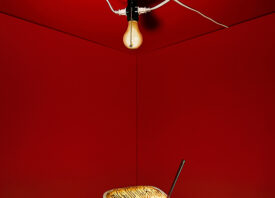
The photographs in this series Fictitious Dishes, taken by graphic designer Dinah Fried, imagine the meals of fictitious characters in novels such as Oliver Twist, The Girl with the Dragon Tattoo, and Alice in Wonderland among others.

Fried is currently pursuing an MFA at Rhode Island School of Design and working on her thesis entitled, Novel Reading.

Oliver-TwistOliver Twist

Girl-with-the-dragon-tattoo Dinah FriedThe Girl with the Dragon Tattoo

alice-in-wonderlandAlice in Wonderland

moby-dickMoby Dick

via Lost At E Minor

via designboom

Brittany-Cohen photographyPhoto by Brittany Cohen

Wine electron microscope William LeGoulion photographyWine

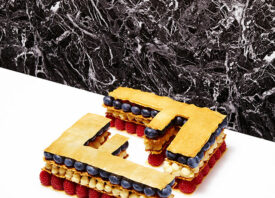
William LeGoullon often credits his devotion to and engagement with the Phoenix arts community as one of his driving inspirations and has actively supported his local interest for over 10 years. Since receiving his BFA from the Herberger Institute of Design and the Arts at Arizona State University in 2009, he has exhibited extensively throughout the state and participated in national juried exhibitions. Of this series, Fingerprints of Drinkable Culture, he writes:

‘My latest works express my fascination with beverages, the variety of methodical processes through which we craft them, and the detailed makeup of each liquid we drink. Stemming from my work as both an artist and as a barista and bartender, my interest is in concocting a recipe of beverage culture, art, and science with regard to what we as humans consume. I am continually inspired by observing what has been left behind and the clues that inspire examination. In this series, I treat the world’s top five most consumed man-made beverages like scientific specimens, allowing each liquid sample to dry before photographing them using a microscope. The resulting images provide us with a chance to analyze these fingerprints of drinkable culture as an act of art consumption.’

Beer electron microscope William LeGoulionBeer

Cola electron microscope William LeGoulion photographyCola

Tea electron microscope William LeGoulion photographyTea

coffee electron microscope William LeGoulion photographyCoffee

Macro photos decaying vegetables Heikki-Leis

Heikki Leis was born in Tartu, Estonia and has lived and worked in the same town for the better part of his life. He has been working as a freelance artist since 2000 and an avid photographer since 2004. These macro photographs of decaying vegetables are from his series, Afterlife.

Macro photos decaying vegetables Heikki-Leis

Macro photos decaying vegetables Heikki-Leis

Macro photos decaying vegetables Heikki-Leis

Macro photos decaying vegetables Heikki-Leis

Macro photos decaying vegetables Heikki-Leis

via Environmental Graffiti

Damien Hirst dot paintings Henry-Hargreaves photography

Henry Hargreaves has always been fascinated by Damien Hirst’s work and that boarder of what is and isn’t considered ‘Art.’ Inspired by Hirst’s worldwide retrospective of his Dot paintings at every Gagosian gallery, Hargreaves decided to recreate some of these paintings made from M&M’s. At a distance they look just like his works but at closer inspection the iconic ‘M’ is visible on each dot. This series was styled by Sarah Guido.

Damien Hirst dot paintings Henry-Hargreaves photography

Damien Hirst dot paintings Henry-Hargreaves photography

Damien Hirst dot paintings Henry-Hargreaves photography

Damien Hirst dot paintings Henry-Hargreaves photography

Damien Hirst dot paintings Henry-Hargreaves photography

rotting pomegranate Klaus-PichlerWatermelon

For nine months Vienna-based photographer Klaus Pichler has been working on ‘One Third‘, a creative food series showing a variety of foods from vetetables to exotic delicies in various states of decay. We asked him some questions about the project.

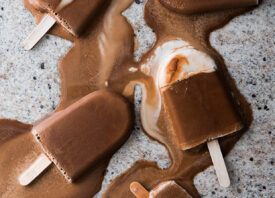
rotting ice cream Klaus-Pichler1Ice cream

What are some of the challenges of working with rotting food?
‘The most tricky thing was that in some cases it was not predictable in which way the food would change shape in the decomposition process. Especially in the beginning, I didn’t know how the different food would look three weeks from the moment I bought it. So it was quite difficult to plan the pictures and to develop ideas on how to stage the different pictures, because it was not clear if that still would be possible with the decayed version of the food. Besides that, some fungus is poisonous, so I had to work with protection masks and clothing and also disinfect the studio area every few days.’

pre-fried vegetable sticks Klaus-Pichler4Pre-fried vegetable sticks

rotting strawberries Klaus-Pichler6Strawberries

Did you work with a food stylist?
No, I created it all on my own, both the arrangements of the food as well as the studio lighting setup. I thought it would have been too easy to let a professional food designer do the work, so I trained myself in arranging.

I really enjoyed developing ideas for each and every food, then going out and getting the food and bringing it home to let it rot. I spent a lot of time at fleamarkets and with second-hand-dealers to find dinnerware and props for the arrangements.

rotting pineapple Klaus-Pichler2Pineapple

Capsican rotting Klaus-Pichler5Capsican

rotting lemons Klaus-Pichler7Lemons

rotting milk Klaus PichlerMilk

Did you let the food decay naturally?
‘Yes, all of it decayed naturally by being stored in large plastic containers on my toilet. Of course, the humidity in the containers was higher than outside – which is necessary for the growth of the fungus. But, as a microbiologist, who gave me some advice said: ‘You can relax, because nature provides enough spores for each and every food, and every food you buy in the supermarket carries enough spores to let it rot effectively’. So I just had to think about the selection of food, the props and the arrangement. The rotting process itself was fully natural and didn’t have to be planned.

rotting jam Klaus-Pichler3Jam

Rotten Jelly Klaus-Pichler14Jelly

rotting fruit cake Klaus-Pichler19Fruit cake

Were you inspired by any other food photographers/cookbooks/etc.?
‘I decided to develop a more reduced, geometrical style where the food itself is in center and the dinnerware is just padding, and to put it all on a black background to let the colors of the decaying food appear more brighter. Funnily enough, when the project was almost finished, I discovered the existence of Modernist Cuisine: The Art and Science of Cooking on the internet (it is much too expensive for me to buy) and thought that accidentially I had created some similar looking pictures because of the black background – although there are lots of differences too.’

ALMOND-COCO-PRALINES Klaus-Pichler18Almond Coco Pralines

rotting fruit cocktail Klaus-Pichler8Fruit Cocktail

Where there any technical/lighting tricks that you had to learn to pull off some of the shots?
It maybe sounds strange, but there were just three basic lighting setups for the whole series, most of it with one studio flash and two small hot shoe flashes. The aspect of the picture that was more tricky was to arrange the rotten food – most of it soft, decomposed, runny and degenerated. I worked with lots of invisible strings, straps, gaffer tape, nails, screws, pins, holders, etc. to enable a balanced standing of the food. Some of the arrangements were stable, some of them just lasted for minutes, if not seconds, and in two or three cases the pictures happened by chance when an arrangement, which was planned totally different, suddenly collapsed and led me to a more appealing final product.

flour Klaus-Pichler13Flour

CHAM CHAM (INDIAN SWEETS) Klaus-Pichler17Cham Cham (Indian sweets)

rotting cheese Klaus-Pichler12Cheese

What are your plans for the series now that it is complete. How do you plan to get the word out about the work?
First of all, I am extremely glad that everything is finished. Now I will take some effort to find a publisher who is willing to release it as a book, and I will also begin to plan an exhibition. Besides that, I am working with an environmental NGO from Austria, Global2000. Food waste definitely is a big topic in their actions, and I am planning some initiatives with them to raise awareness towards the horrific amounts of food getting wasted worldwide. This issue is quite important to me, and I consider it as a personal quest to drum up publicity against the current consumerist behaviour in the industrial nations of the global north.

rotten eggs Klaus-Pichler16Eggs