Posts tagged as:

sports photography

The Ballerina Project

by Alison Zavos on February 10, 2012 · 1 comment

ballerina-project-Dane-Shitagi

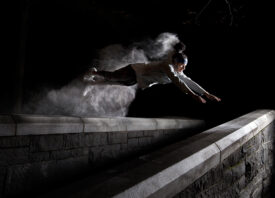
Dane Shitagi’s photography series, The Ballerina Project, grew from the idea of New York City as a magnet for creativity; each photograph is a collaborative work of dance, fashion design and photography played out against the city’s landscape. Shitagi writes:

‘Crafted over the span of ten years the Ballerina Project is not “dance photography” but an etching of a ballerinas heart and emotions. Every aspect of the Ballerina Project is carefully crafted and cultivated. The majority of ballerinas who have posed for the project are professional dancers and the minority are advanced ballet students in renown dance schools.’

ballerina-project-Dane-Shitagi

ballerina-project-Dane-Shitagi

ballerina-project-Dane-Shitagi

ballerina-project-Dane-Shitagi

ballerina-project-Dane-Shitagi

ballerina-project-Dane-Shitagi

ballerina-project-Dane-Shitagi

ballerina-project-Dane-Shitagi

Australian surf photography Stuart Gibson Tasmania

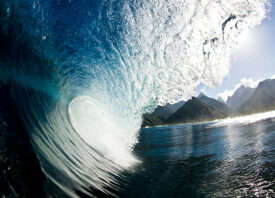
Stuart Gibson is a photographer from Tasmania, Australia. His introduction to photography was one of accident, quite literally. A car smash saw him hobbling on crutches and plastered up to a dangerously itchy level, but this forced shore leave proved to be a blessing in disguise as soon as he picked up the camera. Shooting from the beach on a pre-loved Canon film rig, Gibson realized he had found his passion and his true life calling. Today, his images are published and recognized around the world, both in print and pixel.

Australian surf photography Stuart Gibson Tasmania

Australian surf photography Stuart Gibson Tasmania

Australian surf photography Stuart Gibson Tasmania

Australian surf photography Stuart Gibson Tasmania

Australian surf photography Stuart Gibson Tasmania

Australian surf photography Stuart Gibson Tasmania

Australian surf photography Stuart Gibson Tasmania

Australian surf photography Stuart Gibson Tasmania

Australian surf photography Stuart Gibson Tasmania

Australian surf photography Stuart Gibson Tasmania

Rugby Yale Amy Elkins photography

Amy Elkins has been shooting some groundbreaking work exploring gender roles and masculine identity. In her latest series, ‘Elegant Violence’ she turns to men’s rugby. Elkins writes:

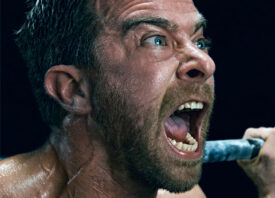
These works are an extension of my ongoing exploration into masculine identity. In this particular project I am fascinated with rugby, a brutal contact sport rich in tradition, dating back to the 1800’s. I’m interested in the balance between athleticism, modes of violence or aggression and varying degrees of vulnerability within a sport where brutal body contact is fundamental to the game. I am also interested in the history of the game and how it has long been described as both traditional and barbaric, elegant and violent.

Inspired by vintage studio portraits of rugby players dating from the 1870’s to 1930’s I have set up daylight studios on the field in order to make portraits of young rugby players immediately after the game. In doing so, I am aiming to capture signs of an 80 minute game that often involves intense physicality and aggressive contact without the use of pads or helmets, focusing on the subtly in their expression and body language, the dirt on their uniforms and the wounds they come away with.

Princeton Rugby Amy Elkins

Rugby Columbia Amy Elkins photography

princeton rugby amy elkins photography

Ryan Young skateboarding photography

Ryan Young is a Los Angeles and San Francisco- based photographer currently attending Art Center College of Design and is set to graduate in the spring of 2012. The examination of people in their unaltered states is central to Ryan’s work; cities, houses, and car interiors act as contextual backdrops for his subjects. Depicting the imperfections and idiosyncrasies of people and the places they inhabit is a way for him to celebrate life—real life.

Recently, Ryan joined the production crew as photographer of a skateboard documentary titled Outside The Lines, a story about two young men pursuing their dream of becoming professional skateboarders while traveling to unique terrains and meeting skaters across the United States. The idea behind Outside The Lines was to plainly reveal the culture of skateboarding to an audience beyond skateboarders themselves. The unobtrusive style of Ryan’s photography helped achieve this goal.

Within media created primarily for committed skateboarders, a predictable aesthetic has been cemented in recent decades. The focus of the imagery shown in monthly skate magazines is the difficulty of executing a trick, with each skater displaying confident mastery over obstacles and environments. The photos Ryan produced on the trip buck this trend by exploring realities in the lives of a diverse sample of skaters that are often ignored. Inconspicuous, often filthy locations where skaters gather to avoid hassle from authorities, emotional moments before and after the struggle to land a difficult trick, downtime, unanticipated conflicts with outsiders and the nonstop journey from one spot to the next are all given close attention, making these moments equally relevant to the act of skateboarding itself.

This series of photos emphasizes the differences in mood held by each of the film’s personalities, uncomfortable travel situations and the relationships between skaters and terrains—a step in the opposite direction away from mainstream portrayals of what skateboarding is. -Travis Schirmer

Ryan Young skateboarding photography

Ryan Young skateboarding photography

Ryan Young skateboarding photography

Ryan Young skateboarding photography

Ryan Young skateboarding photography

Ryan Young skateboarding photography

Ryan Young skateboarding photography

Ryan Young skateboarding photography

Ryan Young skateboarding photography

Ryan Young skateboarding photography

Photo du jour

by Alison Zavos on November 25, 2011 · 0 comments

Mark Tipple photographyPhoto by Mark Tipple

Gareth Iwan Jones photography

Gareth Iwan Jones is a freelance editorial and commercial photographer based in Bistol in the UK. He began his freelance career in June 2010 having previously worked for a news and features agency for four years. Gareth was a finalist in the Times Young Photographer of the Year 2007 and last year his editorial work was recognized at the 2010 British ‘Press Photographers Year’ awards.

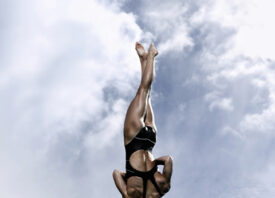
Of this series, Dismount, he writes, ‘I photographed child gymnasts training at a local gymnastics club, The Bristol Hawks, which has a long standing reputation of training champions at both club and international level, and has produced some of Great Britains top ranked gymnasts and Olympic hopefulls. Although the children are young, and range in age from 9-14, they are already capable of some very impressive gymnastic displays’.

Gareth Iwan Jones photography

Gareth Iwan Jones photography

Gareth Iwan Jones photography

Gareth Iwan Jones photography

Gareth Iwan Jones photography

Portus Imaging

Simon Willms, Toronto

by Clare Jordan on January 10, 2010 · 5 comments

Simon-Willms5

Toronto-based photographer Simon Willms’ recent series ‘Minor League’ takes us inside the world of talented young ballplayers in the Dominican Republic. The images capture the determination-and vulnerability-of boys who have grown up with dreams of making it in the big leagues.  Willms documents a pivotal point in their lives that pause between childhood and adulthood-when everything is still possible. The formal portraits offer fascinating insight into the boys world on the island, where they live and where they play. The final compositions are spare and direct, brought into focus with an old Graflex four-by-five camera.

Simon-Willms1

Simon-Willms3

Simon-Willms7

Simon-Willms6

Simon-Willms4

Simon-Willms2

Simon-Willms

Sebastian_Denz6

Sebastian Denz studied Architecture at the University of Hanover, Photography and Fine Arts at the University of Applied Sciences, Arts in Hanover, and Photography at the University of Applied Sciences in Bielefeld. Denz was a visiting artist at the San Francisco Art Institute in 2008 and his works are in numerous collections. These images are from his recent book, SKATEBOARDING.3D, published by Prestel.

Sebastian_Denz

You teamed up with Carhartt Streetwear for this series. What gave you idea to do this series in 3D, and was your book, SKATEBOARDING.3D, part of the initial plan?
‘I have always been especially interested in the various modalities of “space” as a human system of reference, so after some years of experiments and smaller projects with spatial photography, I decided it was time to work on a more intense project and I really wanted to do a book. I’ve been involved with skateboarding for over twenty years, and from the very start, its subversive element was a welcome alternative to outworn patterns of thought and action.

‘The new patterns and creative strategies I had learned have remained deeply rooted in me to this day — something I’m very grateful for. So I had the idea to provide some deeper insight into the strongly differentiated and codified skateboarding culture. When the project started in 2005, I asked Carhartt to support my work’.

Sebastian_Denz4

For more than three years, you photographed the Carhartt skate team while traveling across Europe. Can you briefly describe the process from concept to completion?
‘We travelled around with an old Volkswagen Transporter and made four big tours around Europe, as well as some smaller tours in Germany. My friends, Milena Carstens and Alisdair McGlasson, helped and assisted me. Most of the time we slept in the van, even though it was all full of equipment, lights, and cameras. But we had a lot of fun anyway.

‘In some cases, I knew the location before. But most of the time when we met the skaters in the different countries and cities, we had to do an intense location research. Often it took us days to find a place and space which I liked, and sometimes it was very hard to get permission.

‘All the preparation work for the location — the camera-set-up and the shooting itself — took a lot of time. I always pay a lot of attention to detail, and my 3D “Stein” is not the best with which to take snapshots’.

Sebastian_Denz8

Your friend and custom camera specialist, Dr. Kurt Gilde, built a special 8×10 inch large-format-stereo-camera for this project. What did you need this camera to do that existing cameras on the market were not able to fulfill?
‘According to Vilém Flusser, the person and the apparatus are a functional unit. The apparatus does what the photographer wants to, and the photographer can only do what the apparatus’ program permits. Since I wanted to produce particularly detailed and “informative” pictures — meaning, images that have never been seen before — which would also be three-dimensional images of motion, I had to take the leap to a “meta-program,” which involved making my own apparatus.

‘I had the idea of constructing an “improbable” stereo photography camera that would use 8 x 10-inch sheet film, involve brief exposure time, and would have an adjustable stereo baseline and other special technical features. I’m really happy that my friend Kurt Gilde built this apparatus for me. This unique camera’s program allows me to transform my ideas about individual space and time constellations into “improbable” pictures’.

Sebastian_Denz_3

You photographed the skaters in locations such as sewer systems, forests, and self-made concrete areas. What type of atmosphere were you looking for when deciding upon these locations?
‘One of the implicit themes in SKATEBOARDING.3D is a loss of faith in the natural continuity of the world, which is obviously manipulated through digital processes. This world no longer seems entirely plausible, because when we suspect that something has been digitally manipulated, it takes on an artificial quality, which is not completely artificial, since people continue to believe in its naturalness.

‘Skateboarders are turned into figures that are like avatars in a computer or video game, and yet they seem authentic, too. They appear to exist in hybrid spaces, whose flow of continuity comes to a halt, or whose digital code — like the program mode or state in a computer program — is saved in a kind of savestate.

‘I didn’t want to show the typical skate park next corner, but tried to find locations with a special atmosphere in order to construct these “Postvirtual Spaces,” as I call them. It’s really hard for me to describe that type of atmosphere. I guess, in general, I’m searching for something that’s timeless: classic and modern, simple and complex, concrete and abstract at the same time.’

Sebastian_Denz3

My favorite photograph in the book is the shot of the skater in the forest. Because of the way the leaves and bushes pop out, I feel like I’m interacting in that space and not just being an observer. How did you decide what to emphasize in the image, and was this determined in the actual taking of the photograph or done after it was taken?
‘Yes, you’re right, there’s a lot of information and spatial depth in this image. I decided to show it as a double-page detail, so, when reading the book, you can get a first impression about the immersive power and suggestive energy of the much larger, life-sized originals in the exhibitions.

‘The decision about what to emphasize in the image is determined in the actual taking of the photograph. But in later steps, when working on the computer, it’s possible to influence the three-dimensional impression of a stereo photograph to a certain degree.

‘I make sure that the visual points around the eyes of the skaters in each of the two halves of a stereoscopic image correspond to each other. And this also means that I deliberately guide the focus away from the most dramatic sort of “3D effect.” It was more important to me that the images — due to an intentionally selected, slight parallactic shift at their optical center — can also function as “two-dimensional images.” Then the viewer can choose between two ways of looking at it: with or without 3D Anaglyph glasses’.

Sebastian_Denz7

Along with the recently released book, SKATEBOARDING.3D published by Prestel, this work has been on display at Robert Morat Galerie Hamburg, Sara Tecchia New York, Dada Post Berlin and others. How does looking at the work in person differ from looking at the work in a book or online? Is it mainly about scale or does the printing/pixels also influence the experience?
‘The book and the exhibition are two different things. The book is very important to me because it shows the total series of spatial images. The accompanying text gives the reader thoughts and background information about the work. But even though it’s an oversized volume, it’s limited in size and the printing colour-space is also smaller in comparison to the original prints. You cannot compare looking at the work in the book or online to looking at it in the exhibition.

‘I’ve seen many visitors to my shows react to the large images with very strong emotions. As you described, they are interacting in that space and immersing themselves in the spatial picture. This pull is especially strong in the highly detailed, sculptural 3D photographs in the exhibition.

‘In my opinion, the images create a permanently intriguing conflict that is communicated to the viewer. By deliberately putting on the 3D glasses, the viewer closes himself off from his environment. His field of vision is concentrated. His perception is intensified, and the 3D glasses enable him to eliminate the veiled, vague areas, to clarify the visual space and keep decoding it.

‘The glasses make it possible to see through a “pseudo-window,” giving the viewer access to another space. This space has magical potential — it has suggestive energy, exercises power over the viewer, and temporarily undermines what the German art historian and media theorist Oliver Grau, in his book Mediale Emotionen, calls the “internal, psychological ability to create a sense of distance. In the process, “consciously experienced illusion [can] transform into the subconscious sort and give the illusion the appearance of reality.” The power of the effect, though, fades away all by itself, and then the viewer has an opportunity to create a sense of internal distance, and start thinking again.

‘For me, this moment of immersion — of being completely inside the picture — and the impression this moment makes on the viewer are of crucial significance. Not only are the boundaries between the viewer’s side of the space and the three-dimensional space beyond temporarily dissolved, but in addition, the pictures themselves can, for a short time, look so “real” that they then seem totally artificial again. They convey a sense of “real hyperreality” — a Postvirtual Space’.

Sebastian_Denz2

Win a copy of Sebastian Denz’s new book, SKATEBOARDING.3D, published by Prestel. To enter, be a Feature Shoot Facebook fan and leave a comment on our Facebook page with your favorite photographer and the city you live in.

01Lesteberg_Brian

Brian Lesteberg attended the Minneapolis College of Art in Design, receiving a Bachelor of Arts in Photography. He currently lives and works in Minneapolis, Minnesota. Some of his clients include The New York Times Magazine, Fortune, and Time. Of this series, Raised to Hunt, he says, ‘My father raised me to be a hunter. Every fall, since my twelfth birthday, we’ve followed the migratory birds that descend from Canada to central North Dakota. Approaching manhood, I’ve become more aware of nature’s vulnerability, especially as I master field dressing wild game for evening meals. Exhausting and exhilarating, the time I spend with my father in the field has become a ritual as steady as the migrations they depend on. My photographs are witness to this ritual and its place in the layered order of the natural world’. His work is currently being shown at Bethel University in St. Paul, Minnesota.

02Lesteberg_Brian

03Lesteberg_Brian

04Lesteberg_Brian

05Lesteberg_Brian

06Lesteberg_Brian

Jason_Gould4

Jason Gould’s passion for sports photography goes back to 1985 when he was building snowboard jumps with friends and photographing each other launching skyward. After attending college at UNH Jason spent his twenties traveling and competing internationally as a road cyclist. In 1999 Jason traded in his life on the bike race circuit to move back to NYC and start focusing on a career in photography. In the ten years since, Jason progressed from cyclist to photographer, he has been shooting for clients such as Adidas, Cannondale, Foot Locker, Gatorade, Jetblue, Nike, and Reebok, and editorially for Bicycling, Runners World, Seed, Slam, Trace, Ware, and Wad, among others. Most weekends of the year you can find him in a whitewater kayak somewhere in the northeast, all too often upside down.

Jason_Gould8

How did you first become aware of Street Soccer USA and what made you start documenting homeless soccer players?
‘My agent came across an article in the NY Times about homeless soccer and we both felt like it could be a great idea for a personal project. I went to meet the team from NYC and the director of the program and they were excited to invite me along to photograph them in Washington DC at the National Championships and then on to Milan Italy for the World Cup’.

Jason_Gould

You’ve mainly concentrated on shooting the men on the field and the surrounding area. Have you thought about photographing them in their environments as well?
‘For me, the project is about sport more than what goes on away from the soccer pitch for these players. The focus of most of my work is based in sports and I think it’s great to be able to photograph these guys in the context of athletics, which I believe brings out the best in all of us. I think the arena of athletics is a great equalizer of people. I look at these guys as athletes first and foremost but, of course, I can’t help but have a little added respect for them because I know they face very serious challenges on a day to day basis that most of my other subjects never have to contend with’.

Jason_Gould3

You’ve shot matches at Chelsea Piers (NYC), the 16-city national homeless soccer championship in Washington, DC, and the Homeless Soccer World Cup in Italy. Have you followed one team throughout this experience and what changes over time have you seen in the men that you’ve photographed?
‘The team that went to Italy was a selection of the best players from the National tournament in DC, players from all over the US. I can’t say that I had enough time with them to notice changes but I did get the sense from everyone that they were all very good-hearted people who were genuinely aspiring to better their lives. They seemed to really enjoy the camaraderie of being part of a team and working together towards a goal. I think it was a dream come true to be able to travel to Milan and compete with athletes from around the world for all the players involved. No matter what country they were from and there were 45 countries represented there was an immense amount of respect for each other because they all have shared such similar life experiences. It was clear that there was a deep connection among all the players in that they were all survivors before they were lucky enough to be athletes’.

Jason_Gould6

While photographing The World Cup in Italy, you stayed in a tent with some of the players. Can you tell us about this experience?
‘All of the athletes (about 500) were put up in a tent city on a military base some distance from the arena. Each country had its own tent and decorated it with their countries flag. The commute back and forth from camp to the arena was about an hour each way involving walking, a subway ride and a bus. It was a lot to do twice a day for guys that were playing their hearts out in the hot sun. I heard a comment from a player one day when he was joking around with a teammate. He said: “I went from being homeless to living in a concentration camp”, with a smile on his face. From what I have been told, some of the other countries that have hosted the World Cup event have offered more comfortable living arrangements but everyone made the best of it. Needless to say, it had its challenges’.

Jason_Gould5

What goals or expectations did you have for the series from the start? Was this assignment personal or commissioned?
‘This was a personal assignment from the get go. My goals are always the same: to make beautiful photos that capture the qualities of athletes that we all aspire to possess — grace, pride, power, heart, focus, and humility, to name a few. I’m really happy with the images that came from this story. It was a very positive experience I feel very fortunate to have been able to be part of’.

Jason_Gould1