Posts tagged as:

environmental photography

Peter_Lipton_Photography
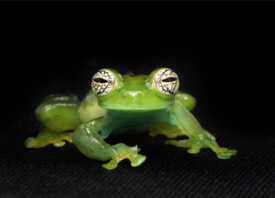
Espadarana Callistomma, gender unkown, still found in their natural habitat.

According to UNESCO, Ecuador has the world’s highest level of biodiversity based on its geographical size. In the Amazonian rainforest of this small South American country, more species of trees grow within one hectare (2,5 acres) than in the entire North American continent. Ecuador also boasts 460 species of amphibians, almost 9 percent of the world’s total. One third of Ecuador’s amphibian species are endangered.—Peter Lipton

Amsterdam-based photographer Peter Lipton’s recent project is based around a research and conservation program at the Catholic University of Quito that was created in 2005 to address the growing number of endangered amphibians due to the country’s increases in logging, oil exploration, agriculture and climate change. Named ‘Balsa de los sapos’—Spanish for ‘Life raft of the frogs’—the program aims to collect, reproduce, and return endangered amphibians to their natural habitat. Lipton creates an exquisite showcase of these unique creatures, many of which are sadly the last known specimens.

Peter_Lipton_Photography
Hiloscyrtus SP, or Tigrinus, gender unkown, last known specimen.

Peter_Lipton_Photography
Cruziohyla Craspedopus, no further information known.

Peter_Lipton_Photography
Atelopus Exiguus, male, last known specimen.

Peter_Lipton_Photography
Hyalinobatrachium, female, still found in their natural habitat.

Peter_Lipton_Photography
Hyloscirtus SP, gender unknown, last known specimen.

Peter_Lipton_Photography
Gastrotheca Espeletia, male, last known specimen.

Peter_Lipton_Photography
Hyloscirtus larinopygion, gender unknown, one of three specimen known.

Peter_Lipton_Photography
Centrolenidae SP, female, still found in their natural habitat.

Peter_Lipton_Photography
Atelopus Nanay, female, one of four specimen, all female.

Peter_Lipton_Photography
Atelopus SP, female, one of three specimen known, all females.

via Oitzarisme

Zeiss

Kim Preston

Plastic Pacific is a series by Austrailia-based photographer Kim Preston exploring the devastating impact of plastics accumulation in oceans around the globe. Inspired to educate viewers, she addresses the Great Pacific Garbage Patch, a mass of plastic waste currently floating in the North Pacific. Alluding to the threats this problem brings, Preston cleverly transforms everyday household objects into the sea creatures likely to be affected.

Preston works as a digital designer and illustrator, only recently focusing on photography. She is a student at Photography Studies College in Melbourne.

Kim Preston

Kim Preston

Kim Preston

Kim Preston

This post was written by contributing editor Amanda Gorence.

Roger-Kisby photography

With no money coming in and gas prices at an all-time high, I took off on a cross-country road trip. I didn’t have a set plan of where to go or what to shoot; I just knew that I wanted to travel and take photos before I returned to New York to start a new chapter in my career.

It was a fantastic experience. I tried to shoot a portrait every day, and I ultimately shot about 70 portraits of people I met along the way. These images are of whoever I came across: a biker at a rest stop in California, a priest at a church in New Mexico, prisoners on work release in Texas, squatters at Slab City, a stripper in Portland, a fly fisherman in Montana and many more.—Roger Kisby

Roger Kisby is a New York-based portrait and editorial photographer who recently quit his job in advertising to pursue a career in photography.

Roger-Kisby photography

Roger-Kisby photography

Roger-Kisby photography

Roger-Kisby photography

Roger-Kisby photography

Roger-Kisby photography

Roger-Kisby photography

Roger-Kisby photography