Posts tagged as:

conceptual photography

Victoria-Crayhon

I place phrases on movie and motel marquee signs, many of which I find through research but also in the course of my frequent long distance travel by car. I use my own sign letters, installing them while filming the placing of the phrases and then leaving the scene with words left intact upon the sign.

Afterward I make my photograph of the finished sign from the sidewalk or roadside, shooting from the vantage point of the driver or pedestrian. I use a large format camera and make large-scale color prints as documents of the sign in its environment. The photograph becomes the sole remnant of the project as the signs inevitably disappear or are taken down.—Victoria Crayhon

Thoughts on Romance on the Road is a project by Rhode Island-based photographer Victoria Crayhon that addresses the effect of media and technology upon human desire. Her roadside text installations read like “public diary entries”—personal and mysterious, they reference “aspirations toward contentment and fulfillment” and combine everyday reality with the ideal. They are intended to provoke the viewer; Crayhon says she is interested in how viewers encounter the work in spaces that are usually reserved for ads or propaganda.

When exhibited in a gallery, Crayhon’s color prints are presented alongside video of her roadside installation process.

victoria-crayhon_Photography

Victoria-Crayhon

victoria-crayhon_Photography

victoria-crayhon_Photography

victoria-crayhon_Photography

victoria-crayhon_Photography

victoria-crayhon_Photography

Reiner_Riedler_Photography
Trois Couleurs; Bleu by Krzysztof Kieslowski, 1993

Austrian photographer Reiner Riedler’s new project, the appropriately titled The Unseen Seen is a series of macro shots of original filmrolls. Having gained access to The Deutsche Kinemathek, Berlin museum and film archive—home to 13,000 national and international film titles—Riedler selected a mix of well-known cult classics and lesser known films to photograph. He set up a makeshift studio in the archive, using film lights to backlight the filmrolls, lighting each one in the same way for continuity. Alone the images present an interesting graphic visual, but Riedler hopes that coupled with the film titles they will rouse the viewer’s unique associations with the film.

Riedler is represented by AnzenbergerAgency and his fine art prints can be bought at AnzenbergerGallery.

Reiner_Riedler_Photography
Ginger E Fred by Federico Fellini, 1985

Reiner_Riedler_Photography
Der Blaue Engel (The Blue Angel) by Josef von Sternberg, 1930

Reiner_Riedler_Photography
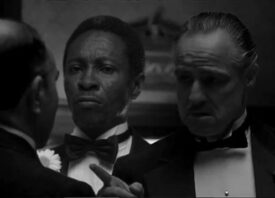
The Godfather by Francis Ford Coppola, 1972

Reiner_Riedler_Photography
The Ghost Of Frankenstein by Erle C. Kenton, 1942

Reiner_Riedler_Photography
Bram Stoker’s Dracula by Francis Ford Coppola, 1992

Reiner_Riedler_Photography
Marlene Dietrich, a conversation with Dr. J. Robert Oppenheimer, Original Print

Reiner_Riedler_Photography
Ghosts by Christian Petzold, 2005

Reiner_Riedler_Photography
Scarface by Howard Hawks, 1932

Reiner_Riedler_Photography
Citizen Kane by Orson Welles, 1941

Jim_Johnston_Photography

UK-based photographer Jim Johnston balances his commercial and editorial work with personal projects that creatively explore technology and geography. Medical Simulation is his recent work shot at The Bristol Medical Simulation Centre, a training facility in West England that provides medical students and clinicians the opportunity to rehearse and perfect procedures on Human Patient Simulators (HPS’s)—fullscale and fully interactive human body simulators—in efforts to improve competency and reduce the 1-5% of accidental hospital deaths that occur due to human error. HPS’s are highly sophisticated and programmed to respond to drugs and simulate life-threatening emergencies—they also make for quite an interesting photographic project.

Jim_Johnston_Photography

Jim_Johnston_Photography

Jim_Johnston_Photography

Jim_Johnston_Photography

Jim_Johnston_Photography

Jim_Johnston_Photography

Jim_Johnston_Photography


Lisa_Gonzalez_Photography

Housewives is New York-based photographer Lisa Gonzalez’s series that recalls society’s expectation of the post-war American housewife. Modeled after advertisements geared towards women in the 1940s, 50s and 60s, Gonzalez’s still life images explore the relationship between consumerism and domesticity of the time. The images have a slightly Stepford-wife feel to them, perfectly put together and pretty as a picture, channeling the visual culture of a time when women were led to believe they were destined for domestic labor.

Lisa_Gonzalez_Photography

Lisa_Gonzalez_Photography

Lisa_Gonzalez_Photography

Lisa_Gonzalez_Photography

Lisa_Gonzalez_Photography

Lisa_Gonzalez_Photography

Alan_Hunter_Photography

Between July and mid-August of 1982 the bodies of 5 young women were found in a short stretch of Washington’s Green River, about 20 miles south of downtown Seattle. Wendy Coffield, Debra Bonner, Marcia Chapman, Cynthia Hinds, and Opal Mills were five of the Green River Killer’s first victims.

Hiding among drab suburban normality, minutes from my childhood home, the most prolific serial murderer in American history, Gary Ridgway, continued his spree for nearly 20 years (convicted of 49 murders, but presumed to have killed closer to 90 young women). This is my exploration of Ridgway’s story and crimes, as well as the bleak, joyless suburban sprawl, stretching from Seattle’s Duwamish Waterway to the banks of the Green River in Kent to my hometown, Federal Way.—Alan Hunter

Seattle-based photographer Alan Hunter’s Green River Land is not meant to be a work entirely of historical fact, but rather a balance between documentary photography and art; between fact and fiction. When available, Hunter used court and police documents to locate and photograph spots that coincided with the murders, while sometimes the locations were “inspired.” A work in progress, Green River Land revisits not just one of America’s most heinous crime sprees, but also the place Hunter once called home.

Debra Lynn Bonner, 23

Cynthia Jean Hinds, 17

Alan_Hunter_Photography

Alan_Hunter_Photography

Wendy Lee Coffield, 16

Marie Malvar, 18

Alan_Hunter_Photography

photoville fence

Charley_Murrell_photography

Last summer, I had the privilege of being a mentor along with Liz Helman, a photographer and picture editor, on the Young Photographers’ Association program. The brief was for the mentees to explore what “home” meant to them. London-based Charley Murrell was one of our group.

Her project was inspired by her flatmate who often dresses up in drag. Murrell wanted to depict like-minded drag devotees in their homes, dressed as both of their gender selves. By the end of the summer, editing the final 5 proved to be a challenge as Murrell had so much material. I think this edit proved the strongest. The YPA exhibited one shot from each submitted series from all their groups around the world at the Margaret Street Gallery in London for 10 days this past January.

CharleyMurrell_photography

Charley_Murrell_photography

Charley_Murrell_photography

Charley_Murrell_photography

This post was contributed by Sophie Chapman-Andrews, Head of Art Buying at McCann London

pine_and_woods_photographyThoughts are Things, 2005. Pine & Woods

They rely not on the words of historians but on the every-day people who held cameras, and came before them. Their goal is to observe, translate, and reinterpret mid-century America. To derive their conceptual pieces they say it takes four eyes with one vision. They move forward by looking back.

Pine & Woods are California-based collaborative duo Gail Pine and Jacqueline Woods, archivers of memory and history. The American Typologies is their ongoing project comprised of found snapshots that explore mid-20th century America. Each unique typology brings together anywhere from 9 to 100 original snapshots taken from anonymous camera holders. To arrive at a successful typology, Pine & Woods carefully mine their vast archive of found imagery they have accumulated over the course of a decade, hand-picking photographs that align in subject matter, scale, size, color, composition, contrast and overall condition. The classifications offer a look into our collective identity and honor both our diversity and likeness, meanwhile preserving a dying breed—the snapshot.

Pine_and_woods_photographyYour Opinion Counts, 2007. Pine & Woods

Pine_and_woods_photographyEach Word was a Wound, 2008. Pine & Woods

Pine_and_woods_photographyFor Constance, 2007. Pine & Woods

Pine_and_woods_photographyKisses, 2007. Pine & Woods

via The Typologist

Gordon_Douglas_Ball_Photography
Lost in the City of Lights, 2012

Instead of me following photography, I wanted to have photography follow me. Completely strip it down and build it up to make it my own.
Gordon Douglas Ball

New York-based photographer Gordon Douglas Ball has taken the camera out of the equation to create a series of images that are made by exposing 35mm and 120mm to different light sources, saying he wanted to “make” photographs rather than “take” them. That he did, and in quite an impressive DIY style, sometimes working on his fire escape or kitchen stove top. He started experimenting with colored LED lights and let them leak onto the film, after which he wound the film back into the canisters to be processed. It worked, and Ball loved the unique results.

Inspired by his break away from traditional photography, he thought why not tweak the developing process? I’m So Broke, shown here, is an example of his experimentation with the chemical process. The white in the image is hair taken from his wife’s comb. After the film was processed, he re-bleached it with the hair. Her chemically treated hair stained the already developed emulsion, producing the green, pink and blue. Other images were created by re-developing and bleaching, enabling him to play around with the exposed emulsion. A step outside the box, Ball’s abstract pieces excite the senses, forging ahead in a way unique to their own.

Gordon Douglas BallI’m So Broke, 2012

Gordon_Douglas_Ball_Photography
Crew of One, 2012

Gordon_Douglas_Ball_Photography
Alone & Essentially Grey #61, 2012

Gordon_Douglas_Ball_Photography
Yeah I’ll Be Around, 2011

Gordon_Douglas_Ball_Photography
(Absolutely) No Dunking, 2012

Gordon_Douglas_Ball_Photography
Pour Joan, 2011

Martina_Giammaria_Photography

Naturalis Historia is work revisited through collages inspired by 18th-19th century encyclopedias about botany, animals and all the things revolving around the natural world. Some of the backgrounds that I’ve used are photos of the three-dimensional models of nature scenes made in the Natural History Museum in Milan. Other elements have been taken frome those encyclopedias, where every living being was classified with its particular scientific name and, in a certain sense, collected. Also, the model is made part of this classification.—Martina Giammaria

Milan-based photographer Martina Giammaria was formerly an archaeologist. Beautifully styled by Maela Leporati, Giammaria’s morphings of the human and natural world are quite surreal and equally blend and separate the two.

Martina_Giammaria_Photography

Martina_Giammaria_Photography

Martina_Giammaria_Photography

Martina_Giammaria_Photography

Katie_Moore_photography

Maternity and birth photographer, Katie Moore of Beach Birth Photography brings us Barbie Birth, an extensive series following the birthing journey of the one and only Barbie, a moment we may not have expected to see. The photos unfold in a storyboard fashion and don’t miss a beat on the details. Moore gives us a Barbie that is fresh on the times, not only do we see her go for an at-home birth with the help of a midwife and the support of Ken, but she is also captured breastfeeding her newborn.

Katie_Moore_photography

Katie_Moore_photography

Katie_Moore_photography

Katie_Moore_photography

Katie_Moore_photography

Katie_Moore_photography

Katie_Moore_photography

Katie_Moore_photography