Search this site
Photographer Lev L. Spiro Captures the Feeling of Thin Places

Most people have experienced a “thin place” even if they don’t necessarily realize it or give it a name. When I learned about them a few years ago, I was able to recall some of these places from my own past, even though I didn’t know the terminology at the time.
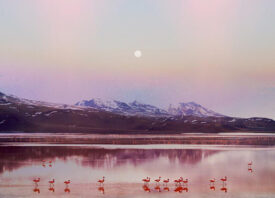
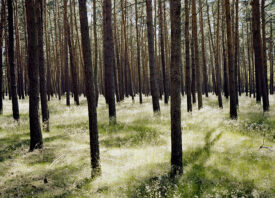
I’m currently listening to The Story of King Arthur and His Knights, and the knights are forever leaving the comforts of Camelot to seek adventure. On their journeys, they often come across places in the woods where the atmosphere changes, time takes on a different quality, and the boundary between the ordinary and the otherworldly becomes uncertain. When I saw the work of photographer, film, and television director Lev L. Spiro, I could immediately imagine what these spaces might look and feel like.
How would you describe a Thin Place, and do you remember when you first came across one?
‘The idea of “Thin Places” comes to us through Celtic spiritual tradition. They’re locations where the boundary between the ordinary world and the spiritual world is believed to grow thin — where something otherworldly or sacred feels close at hand.
‘I spent my 11th through 13th summers in Vermont at an Outward Bound-type wilderness camp, and remember experiencing feelings of awe, not only on mountaintops, but just being immersed in the natural world, away from cities and suburbs. I didn’t have a name for it back then, but I think I was encountering what I would later understand as Thin Places.’

In your practice (and in how you teach others), are these places intentionally sought out or happened upon?
‘Both, but I think the more interesting ones are often happened upon. Thin Places don’t have to be canyon vistas or spectacular views. One of the things I teach, in the first class, is how to move from ordinary seeing to heightened perception in the field, and a lot of that comes directly from Minor White and Paul Caponigro — their emphasis on receptivity and allowing the subject to reveal itself. I encourage students to slow down and open up their senses to not just light, but movement, form, time, color, texture, shapes and relationships. It’s the first step in transforming their work — from simply describing a place to conveying how it feels to them in that moment.’


How do you personally recognize these places? Is it a feeling or certain things you recognize in the environment? Are there clues?
‘It takes practice to remain perceptually and emotionally open as a photographer. The most obvious clue is interesting light, certainly. But I learned from working with Sam Abell to let myself be stopped by things. I don’t necessarily know what’s stopped me — I often have to figure it out. Sometimes it’s a glimpse — a waterfall through trees, or a vista through a dark foreground. Other times, by the time you understand what stopped you, it’s gone! The backlit leaves are now dark, or the breeze creating movement has died. That just comes with the territory. But first you have to learn to let yourself be stopped.’
Once you recognize a Thin Place, is there anything you do as far as respecting the area?
‘I think Thin Places exist between you and your environment, and honestly I’m respectful of the natural world as a matter of course. I’m careful not to damage or disturb things, and I try to leave no trace that I’ve been in a place — the only thing I take are images. Of course, if you’re somewhere that has spiritual meaning to people, Indigenous or otherwise, you want to be respectful of their beliefs as well.’

Are there specific times (both in the calendar year and times of day) that you recommend visiting/photographing these spaces?
‘For me, it very much depends on the series for which I’m making work. My latest series “Elemental” is made with long exposures, and I look for running water and/or clouds in the sky, so I try to schedule trips when and where I can find those things. For the previous series, which was actually called “Thin Places”, most of the images came from the two hours after sunrise or two hours before sunset, when I find the light most evocative — but they were less dependent on time of year.’
In your own work, do you photograph what you recognize as a thin place, or do you seek out to capture the feeling of a thin place?
‘Well, yes and yes. But my work is very much geared toward being experiential, toward evoking mood or emotion. I’m less interested in proving that a particular place is “sacred” than in making an image that conveys something of what I experienced there. If I’m just recording or describing a place, for me that’s not a successful image.’

Now that you’re very aware of these spaces, do you feel that you’re always on the lookout for them?
‘That’s a great question. I’m often really *not* on the lookout for them, but now I can’t help recognizing them! And that can be both annoying and wonderful. I often go out with the intention of working on a series, such as Elemental, for which I’ll schlep a tripod, use a certain lens, have 6-10 stops of ND in place, and have my camera settings dialed in for that series. Inevitably, I’ll see something completely different than what I’m looking for, and then have to completely redo my camera setup to make images! In a way, that’s exactly what I’m teaching — to remain open enough to abandon what you thought you were looking for.’

You teach a class on this topic, “Thin Places: Photography and the Sacred in Nature” with Santa Fe Workshops, which has been sold out twice now (with a long waitlist). Why do you think it’s so popular? And what is the main takeaway for your students?
‘I think it’s struck a chord with photographers who are already technically accomplished at making landscapes, but want to push their work into a more expressive realm. When you’re able to convey more than description with your image, you’re forging a much deeper connection with the viewer. I’d say the main takeaway is that Thin Places, or ‘the sacred’, aren’t really hidden in certain places or subjects: they emerge through attention, curiosity, presence, and the willingness to remain open long enough for the world to affect us.’