Posts tagged as:

documentary photography

Sean-Gallagher_Photography

As concerns around the nuclear conflict with North Korea grow, British photo-journalist Sean Gallagher revisits his 2009 venture to North Korea on assignment for the Globe & Mail. Naturally, shooting proved difficult in the sequestered country. Posing as tourists, Gallagher and his colleague were accompanied at all times by a tour guide and government minder who were always a step behind them. He says of his experience:

From our four days within the country, it was almost impossible to get close to the people to photograph. As much as I would have liked to, getting close to the everyday person proved to be almost impossible. Hence, my photographs from this journey have a sense of isolation about them. It is an isolation probably born from my own feelings while being there. People are dwarfed against the mighty, imposing communist-era architecture, small and insignificant against the overbearing size of the buildings.—Sean Gallagher

You can read more about this fascinating experience on Gallagher’s blog.

Sean-Gallagher_Photography

Sean-Gallagher_Photography

Sean-Gallagher_Photography

Sean-Gallagher_Photography

Sean-Gallagher_Photography

Martin_Parr_Photography
GB. England. Kent. Margate. 1986. from Life’s A Beach (Aperture, 2013)

You can read a lot about a country by looking at its beaches: across cultures, the beach is that rare public space in which all absurdities and quirky national behaviors can be found.—Martin Parr

We can’t say enough about British photographer Martin Parr’s new book, Life’s a Beach, published by Aperture this year. Parr’s coastal infatuation started in the 1970s—you may recall his 1986 release of The Last Resort, a capture of the seaside resort of New Brighton, near Liverpool. He has since continued to document beach-goers from all corners of the world—Argentina, Brazil, China, Spain, Italy, Latvia, Japan, the United States, Mexico, Thailand, and of course, the U.K. Compiling 100 sun-soaked images of intriguing and eccentric characters in sand and sea, Life’s a Beach is a true delight.

Martin_Parr_Photography
Italy. Lake Garda. Riva del Garda. 1999. from Life’s A Beach (Aperture, 2013)

Martin_Parr_Photography
GB. England. Mablethorpe. 1992. from Life’s A Beach (Aperture, 2013)

Martin_Parr_Photography
GB. England. Weymouth. 2000. from Life’s A Beach (Aperture, 2013)

Martin_Parr_Photography
Japan. Miyazaki. The Ocean Dome. 1996. from Life’s A Beach (Aperture, 2013)

Martin_Parr_Photography
Belgium. Knokke. 2001. from Life’s A Beach (Aperture, 2013)

Martin_Parr_Photography
Italy. Lake Garda. 1999. from Life’s A Beach (Aperture, 2013)

Martin_Parr_Photography

Freya_Najade_Photography Thelma in her Living Room. I got married for the first time when I was 15 years old. After my first husband I had two other and five children. I thought life was just about raising kids and being a mother.

To my surprise, the older people were not just proud of their age and the fact that they made it that far in life, they were also still falling in love and breaking up. They were overcoming their lifetime partner’s death, living out their erotic fantasies or dealing with the loss of their sexual desire.—Freya Najade

If you are lucky, you get old is London-based photographer Freya Najade’s series of intimate vignettes exploring the life stories of her elderly subjects. Najade captures the present while listening to the past, reminding us that some things never change—to love, to suffer, and to dream are forever lasting.

Freya_Najade_Photography Thelma’s Boot. My biggest fear is that I can’t take care of myself anymore. This is what keeps me going. Every day.

Freya_Najade_Photography Thelma’s Vase. I fell in love for the first time four years ago. With Swede I had my teenage years, which I never had. He has the prettiest blue eyes. When he walks through my door, my whole body just warms up. This is a beautiful feeling, but when he is not there it is a terrible feeling. I had my first orgasm with him.

Freya_Najade_Photography Thelma. One day Swede went to see his son for seven weeks. The seven weeks turned into seven months. I got really ugly with him then. When he came back he didn’t want to touch me anymore.

Freya_Najade_Photography Squirrel. Things got difficult when we stopped agreeing. Once I started having my own say about things, Swede would go home. People often don’t realize that everyone sees things differenty. This can be a problem.

Freya_Najade_Photography Desert. My children can’t understand me. They are not proud of me. But I hope one day they will remember me as a nice old lady.

Freya_Najade_Photography Thelma at a Dance. Slowly I am getting to the point, that I feel I have to move on. I am not a fool just waiting around. If Swede doesn’t want me, I will get around without him.

Freya_Najade_Photography Chris in his Bedroom. I am happy with my life. I have now been with my partner John for 36 years. It was not always easy, but definitely worth it.

Freya_Najade_Photography Chris’ Photo Album. John and I went through a lot together. In the 1980s we experienced how almost a whole generation of gay men got wiped out by Aids. Many of our friends in these pictures died within three years.

Freya_Najade_Photography Chris and John. I was married to a woman for thirteen years. I had seven children with her. I am not only proud of them, but also that John and I raised them together.

Freya_Najade_Photography Flamingo

Freya_Najade_Photography Chris and his Dog. To lose my legs was not as difficult as I thought, my divorce and to admit that I am gay was much more difficult for me. But everything that is difficult in life makes you stronger.

Freya_Najade_Photography At the Dinner Table.

Freya_Najade_Photography Chris and John in the Pool. When I saw John for the first time, I knew my ship had arrived. Meeting him was the best thing in my life.

Freya_Najade_Photography At the Gay Church. Ending a relationship is very easy. So many people just walk away from it, while with a little work they just could have stayed together. You have to grow together.


Fadwa, 20 years old, widow with 3 children: "My husband died on the front lines, I will die on the front lines, may God help us."

Photographer Sebastiano Tomada Piccolomini brings us more great work from the forefront of the Syrian conflict, this time showcasing women from an all-female fighting unit of the Free Syrian Army based in Aleppo. Strong and with conviction, the women stand ready.

Khansa, 42 years old, married, housewife with 7 children: “I feel optimistic, we will defeat the regime, put an end to poverty and mistreatment.”

Om Ahmad, 72 years old, housewife with 3 children: "My house in Dar’a was destroyed by 2 bombs…I moved to Aleppo with my family, I chose to pick up a weapon and fight the regime.”

Rana, 20 years old, student: "What choice do we have?”

Om Faraj, 30 years old housewife, no children: "Being mistreated by a regime security guard in front of my husband was the most humiliating thing that has ever happened to my family, I picked up a weapon, I joined the fight."

Amal, 30 years old, married, housewife with 3 children: "I'm sincere to God, that is all I need and want, the rest will come with time.”

Ali, 16 years old, student: "The West sees no problem in Syria, while we beg for their support, our children, friends and family are being punished, for no reason."

Benifet Ikhla, 27 years old, widow with 6 children: "I fight for life and freedom, I fight to prove that woman and man are equal."

via TIME

Alice_Proujansky_Photography

The maternity ward of the Juan Pablo Pina Hospital attends 600 births a month without hot water. Women labor on old plastic mattresses, electricity is sporadic, and relatives clean patients in crowded rooms at this public hospital in San Cristóbal, Dominican Republic. Although 98% of Dominican women had a skilled attendant at birth, the maternal mortality ratio was the second highest in the Caribbean when these photographs were taken in 2006 – 2007.
Alice Proujansky

Brooklyn-based photojournalist Alice Proujansky has been working on a project about birth and culture for the last 6 years, documenting women and their birthing experiences in the Dominican Republic, Nigeria, the Navajo Nation, Massachusetts and Mexico. Proujansky explores midwifery, cultural traditions, the ever-present risk of maternal mortality in developing countries, and the universal intensity of giving birth. Delivery, shown here, takes us inside a hospital in San Cristóbal, Dominican Republic.

Alice_Proujansky_Photography

Alice_Proujansky_Photography

Alice_Proujansky_Photography

Alice_Proujansky_Photography

Alice_Proujansky_Photography

Alice_Proujansky_Photography

Helping Hands, a social service organization in India, takes in people who have been rejected by society. This includes the mentally and physically ill, the elderly, orphans, and HIV/AIDS patients. Gowri is both mentally ill and HIV positive, believed to be due to rape.

In India, where sex is taboo and AIDS/HIV carries a heavy stigma, infection rates have grown to epidemic proportions. Major forms of transmission include blood transfusions, men who have sex with men, and intravenous drug users. However, by far, the highest infection rates are due to heterosexual sex.

Second only to Africa, the numbers were predicted to reach 10 million by 2010. Yet, it is still an issue that most of India is not talking about and that most of the world does not know.—Leah Nash

AIDS in India is Portland-based photographer Leah Nash’s powerful documentation of a country coping with its current AIDS crisis. Nash leads us on an arresting journey that reveals the myriad facets of India’s epidemic—we see the heartbreak of HIV-positive children in an orphanage, the lack of knowledge and treatment due to the still-present stigma, the sobering realities of the disease, and also education efforts moving forward.

Kumar is blind as a result of AIDS complications. He has two children and a wife who abandoned him. He is cared for at Snehadaan, a Christian AIDS Hospice run by Sisters, Fathers and Brothers. Many of the care centers in India are Christian-based facilities that became exclusively AIDS focused when the demand became overwhelming.

Prasad, age 30, was a taxi driver who loved reciting poetry. His younger brother got married in March and so his family sent him to an AIDS hospice so no one would know he was sick. This is where he died.

At CHES orphanage, 60% of the children are HIV positive as well as the workers. In the baby room, cries or laughter are rarely heard. AIDS orphans are a rising concern, and account for approximately 3% of infection rates.

The NGO Helping Hands maintains a special ward for children infected with the disease yet they lack money for medicine or treatment.

At Gilead’s Balm, a Christian based heroin detox center in Manipur, India new patients are chained to prevent escape. The longer their stay, the more links are added to the chain. The program, which lasts two years, is immensely popular with the community and is entirely locally funded. Their motto is “Chaining is changing.”

Raju contracted HIV through needle-sharing and for the last four months has been unable to speak or move. His wife, Assalata, does all his care-giving and says she is, “Not brave enough to test herself.” They have been married for two years.

Shobha and her father wait at Asha Kirana, a HIV clinic. Shobha is 19 and has been married for little over a year. She is seven months pregnant and positive. Her husband, a truck-driver, does not want the child. One month later, Shobha will abort her child, leave her husband and return to her family.

Rubber gloves are laid out to dry, in preparation for another use. Though Africa has by far the worse percentages of AIDS/HIV infection rates, many researchers think that in terms of sheer numbers, India ranks first.

Leah_nash_photography

Heroin and needle use is common in NE India which borders Burma and is a major drug route. HIV levels in this area are some of the highest in the country. Many social service organizations have begun needle exchange programs to reduce the spread. Kola will sometimes steal to get the 50 ruppes (aprox. one dollar) he needs to fix.

Leah_nash_PhotographyA strip of “rubber goods” stores in Calcutta. Most people in India are embarrassed to buy condoms and have no knowledge of how to use them.

Leah_nash_photography

Many NGO's perform condom demonstrations for truck drivers, a high-risk group for HIV. When the disease first became an issue in India, areas of higher incident rates could be traced along truck routes.

David_Rochkind_Photography

A young girl walks by a caravan of police vehicles during a security sweep looking for criminals and drug dealers. Law enforcement officials along the border say that increased border security has resulted in more drugs staying in Mexico, which has elevated crime and created a variety of social problems. The consequences of this conflict are felt, and exhibited, throughout the daily lives of many communities in Mexico.

Heavy Hand, Sunken Spirit documents the social costs and consequences of Mexico’s violent drug war. We recently talked to Detroit-born, Haiti-based photographer David Rochkind about his experience photographing a conflict that he says is increasingly “melting two worlds together, making a singular Mexico defined as much by violence and tension as by history and culture.”

How long did you work on this project? Did you live in Mexico the entire time you were working on this series?
“I started the project in 2007 with a trip to Nogales, Sonora. At the time I was living in Caracas, Venezuela and didn’t know the exact shape that the project would take. In 2009 I decided to move to Mexico City to be able to work on the project more consistently and with more depth. The last images I shot for this were in 2011.”

David_Rochkind_Photography

This stretch of the border divides Nogales, Arizona at left and Nogales, Sonora at right. There has been little violent spillover into the US, though recently US citizens have been killed with more frequency in Mexico. In March of 2010, two US Consulate workers were gunned down in Ciudad Juarez.

It looks like you had an incredible level of access. Can you talk about how you came across most of your shots/subjects?
“Every situation required a different approach, but the most important thing is just to be kind to people. You have to make sure that the people you are working with understand that they are not simply props in a tableau that you are creating; that you are not only interested in them to the extent that they can help you make an interesting picture. I found that people are usually open if you are honest with them and are truly interested in the story they have to tell.”

David_Rochkind_Photography

Members of a Norteño band sit in their tour bus after giving a show in Mexico City. Many Norteño groups sing corridos, or ballads, that tell a story. Some of these are narco-corridos, ballads that tell the stories of famous drug dealers. There has been a wave of killings of musicians that sing narco-corridos.

David_Rochkind_photography

Followers of La Santa Muerte, or Saint Death, attend a mass that takes place on the first day of every month. Many drug dealers and criminals follow Santa Muerte, as it is believed that she looks after those that the Catholic Church rejects. Saint Death is one part of a broad Narco Culture that is emerging in Mexico.

You started this project in 2008. How do you think the situation in Mexico (in the cities where you were photographing) has changed since then?
“In the years that I was working on this and living in Mexico I did see the situation change. On my first trip to Nogales, for example, people were just barely starting to talk about the violence and its effect on the community. But over the years, in the north and beyond, the violence and the number of deaths grew. It became a constant presence on the TV and in the newspapers and peoples lives were altered by it.”

David_Rochkind_Photography

Members of the Mexican army burn a field of Marijuana in the state of Sinaloa. Mexico was once primarily a transit route for drugs to the United States, but the country is increasingly becoming a producer of marijuana, cocaine, heroin and methamphetimines.

I imagine that you put yourself in some pretty compromising situations in order to make these photographs. Can you talk a bit about how you were able to make these images without being harmed?
“You always have to determine what level of risk you are willing to take. I think the most important thing is to understand that you are working in a potentially dangerous situation and you are not immune to that. It is important to do research before you go so you can understand what the potential dangers are and how to minimize them. I almost always worked with local contacts and journalists who better understood the situation on the ground and could help me navigate it. And if something ever felt too dangerous, even if I couldn’t say exactly why, I would leave. It is important to trust your instincts.”

David_Rochkind_Photography

Drug use and drug addiction has risen over the past 5 years, bringing with it a variety of social problems that the country will be dealing with long after the violence ends. As security on the border tightened more drugs remained in Mexico allowing the cartels to create a homegrown market. In addition, small time dealers have been increasingly paid with product instead of money. Here, a woman shoots heroin in front of her lover and a baby they are supposed to be caring for.

David_Rochkind_Photography

A pregnant 14 year old girl was shot in Ciudad Juarez. Her father and 2 siblings have also been killed, leaving behind a grieving family trying to make sense of their new reality.

What were some of the more memorable moments you experienced while making this work?
“I was especially struck by some of the personal stories of loss that I heard. If you spend enough time covering the conflict in Mexico you are bound to witness truly heartbreaking things—children killed at a birthday party by masked gunmen, a pregnant teenager shot and killed in the street, or a man killed while waiting in his car at a traffic light.

“So much horror was happening and, in some cases, perhaps by necessity, it seemed like the violence became a seamless part of people’s lives. But amidst all of this, you still found warmth, generosity and beauty. I remember a group of migrants offering me food and water on top of a train as we all headed north. They knew that I was American, had an expensive camera and probably had a wad of cash in my pocket and could get off the train at any time, but they were still looking out for me and offering to share the little that they had.”

David_Rochkind_Photography

Central American migrants ride atop a freight train carrying cement as they head north in an attempt to enter the US. Traveling by train has become more dangerous as kidnappings and robberies have risen in recent years with increased drug cartel activity.

Your book, Heavy Hand, Sunken Spirit: Mexico at War, was released in 2012. How did you know when this work was complete and ready for publication?
“It is hard to know exactly when any work is complete. The issue doesn’t end and you never finish telling the story of every angle of the issue. But there does come a point when you have told the story you wanted to tell in a way that has a beginning and an end, and that really shows what you saw and felt.”

David_Rochkind_Photography

A man who has just been returned to Mexico after trying to illegally enter the US stands right across the border at a Mexican customs and immigration office in Nogales, Sonora.

As you are currently based in Port-au-Prince, Haiti, do you find many similarities between the ongoing situation there and what you found in Mexico?
“The issues that people are dealing with on a daily basis really are quite different in Haiti. There is extreme poverty, public health disasters and a total lack of infrastructure. But I find that in many places there are several overarching themes that remain the same—corruption, lack of educational opportunity and lack of economic opportunity.”

David_Rochkind_Photography

A prostitute undresses in a short-term love motel in Nogales, Sonora, where she entertains both American and Mexican customers. The drug cartels have been increasingly diversifying their business into prostitution and human trafficking.

David_Rochkind_Photography

Two young men are arrested for burglary in Mexico City, Mexico. Violent crime throughout Mexico is rising. The intimidation and reach of the drug cartels affects witnesses, police and lawyers, many of whom are afraid to get involved with any type of criminal trial. Impunity throughout the country is spreading.

You mention that for people of Mexico the scars will linger on long after the violence subsides. In your opinion, what must be done/what will it take for the violence to subside?
“I really don’t know. It is a difficult question and not one that I set out to answer. It is important to deal with the issues of corruption, education and jobs, but I don’t know if that is enough or everything.”

via A Photo Editor

Holly_Lynton_Photography

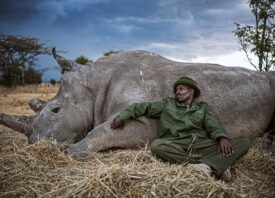
In these photographs, the heavy, overbearing machinery associated with modern life gives way to the simple, but potent, symbiotic relationship between man, creature, and the forces of weather, and allows these individuals a style of work that resembles a form of meditation.

They work in tandem with their environment, reaping benefits, but leaving little mark: beekeepers, wearing no protective clothing; trainers at a wolf sanctuary; catfish “noodlers,” capturing seventy pound fish with their bare hands; and farmers, using traditional practices—which now seem heroic—to run small, sustainable farms. They take huge risks to stay committed to their methods, drawing on human strength of body and mind.—Holly Lynton

Five years ago, photographer Holly Lynton left New York for the farm country of Western Massachusetts, a setting she describes as synergistic not just with her locavore lifestyle—eating locally, sustainably, and organically—but also with her recent explorations in photography. Bare Handed captures the relationship between man and animal and “the delicate balance between dominance and surrender.” Lynton also provides a look at small-scale, sustainable, organic farms and the spiritual creed that results from such a way of life.

Lynton was recently selected as a Syngenta Photography Award finalist, an international competition that aims to stimulate dialogue around key global issues.

Holly_Lynton_Photography

Holly_Lynton_Photography

Holly_Lynton_Photography

Alan_Hunter_Photography

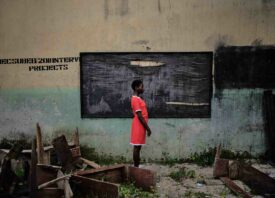
Between July and mid-August of 1982 the bodies of 5 young women were found in a short stretch of Washington’s Green River, about 20 miles south of downtown Seattle. Wendy Coffield, Debra Bonner, Marcia Chapman, Cynthia Hinds, and Opal Mills were five of the Green River Killer’s first victims.

Hiding among drab suburban normality, minutes from my childhood home, the most prolific serial murderer in American history, Gary Ridgway, continued his spree for nearly 20 years (convicted of 49 murders, but presumed to have killed closer to 90 young women). This is my exploration of Ridgway’s story and crimes, as well as the bleak, joyless suburban sprawl, stretching from Seattle’s Duwamish Waterway to the banks of the Green River in Kent to my hometown, Federal Way.—Alan Hunter

Seattle-based photographer Alan Hunter’s Green River Land is not meant to be a work entirely of historical fact, but rather a balance between documentary photography and art; between fact and fiction. When available, Hunter used court and police documents to locate and photograph spots that coincided with the murders, while sometimes the locations were “inspired.” A work in progress, Green River Land revisits not just one of America’s most heinous crime sprees, but also the place Hunter once called home.

Debra Lynn Bonner, 23

Cynthia Jean Hinds, 17

Alan_Hunter_Photography

Alan_Hunter_Photography

Wendy Lee Coffield, 16

Marie Malvar, 18

Alan_Hunter_Photography

photoville fence

Nicole_Akstein_Photography

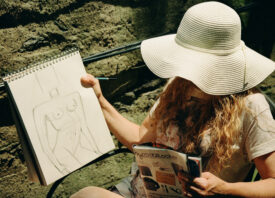
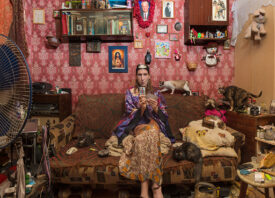
Born to Brazilian immigrants, Atlanta-based photographer Nicole Akstein delivers an evocative series Mother, Mãe. The work follows her mother, unfolding in a non-linear narrative that she says “speaks to the ever-evolving nature of its subject with imposing curiosity.” The images undulate with moments of tension, liberation, reflection, disappointment, fantasy.

Akstein captures her central subject not just as a mother, but also as a woman; saying the images are “less biographical and more indicative towards notions of age, beauty, relationships, and the human condition.” It is within that moment of accepting a parent as first and foremost a person, that much can be revealed—we are grateful Akstein does this. The work balances just between personal and universal, exposing mother to daughter, daughter to mother and self to self.

Nicole_Akstein_Photography

Nicole_Akstein_Photography

Nicole_Akstein_Photography

Nicole_Akstein_Photography

Nicole_Akstein_Photography