Posts tagged as:

animal photography

Peter_Lipton_Photography
Espadarana Callistomma, gender unkown, still found in their natural habitat.

According to UNESCO, Ecuador has the world’s highest level of biodiversity based on its geographical size. In the Amazonian rainforest of this small South American country, more species of trees grow within one hectare (2,5 acres) than in the entire North American continent. Ecuador also boasts 460 species of amphibians, almost 9 percent of the world’s total. One third of Ecuador’s amphibian species are endangered.—Peter Lipton

Amsterdam-based photographer Peter Lipton’s recent project is based around a research and conservation program at the Catholic University of Quito that was created in 2005 to address the growing number of endangered amphibians due to the country’s increases in logging, oil exploration, agriculture and climate change. Named ‘Balsa de los sapos’—Spanish for ‘Life raft of the frogs’—the program aims to collect, reproduce, and return endangered amphibians to their natural habitat. Lipton creates an exquisite showcase of these unique creatures, many of which are sadly the last known specimens.

Peter_Lipton_Photography
Hiloscyrtus SP, or Tigrinus, gender unkown, last known specimen.

Peter_Lipton_Photography
Cruziohyla Craspedopus, no further information known.

Peter_Lipton_Photography
Atelopus Exiguus, male, last known specimen.

Peter_Lipton_Photography
Hyalinobatrachium, female, still found in their natural habitat.

Peter_Lipton_Photography
Hyloscirtus SP, gender unknown, last known specimen.

Peter_Lipton_Photography
Gastrotheca Espeletia, male, last known specimen.

Peter_Lipton_Photography
Hyloscirtus larinopygion, gender unknown, one of three specimen known.

Peter_Lipton_Photography
Centrolenidae SP, female, still found in their natural habitat.

Peter_Lipton_Photography
Atelopus Nanay, female, one of four specimen, all female.

Peter_Lipton_Photography
Atelopus SP, female, one of three specimen known, all females.

via Oitzarisme

Zeiss

Holly_Lynton_Photography

In these photographs, the heavy, overbearing machinery associated with modern life gives way to the simple, but potent, symbiotic relationship between man, creature, and the forces of weather, and allows these individuals a style of work that resembles a form of meditation.

They work in tandem with their environment, reaping benefits, but leaving little mark: beekeepers, wearing no protective clothing; trainers at a wolf sanctuary; catfish “noodlers,” capturing seventy pound fish with their bare hands; and farmers, using traditional practices—which now seem heroic—to run small, sustainable farms. They take huge risks to stay committed to their methods, drawing on human strength of body and mind.—Holly Lynton

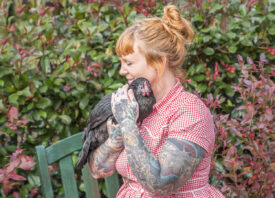
Five years ago, photographer Holly Lynton left New York for the farm country of Western Massachusetts, a setting she describes as synergistic not just with her locavore lifestyle—eating locally, sustainably, and organically—but also with her recent explorations in photography. Bare Handed captures the relationship between man and animal and “the delicate balance between dominance and surrender.” Lynton also provides a look at small-scale, sustainable, organic farms and the spiritual creed that results from such a way of life.

Lynton was recently selected as a Syngenta Photography Award finalist, an international competition that aims to stimulate dialogue around key global issues.

Holly_Lynton_Photography

Holly_Lynton_Photography

Holly_Lynton_Photography

Wayne-Levin underwater photography

Wayne Levin captures all things ocean—freedivers, surfers, whales, dolphins, seals, sharks, rays, and shipwrecks—and that’s just a short list of his exquisite subjects. Exploring the mysterious depths of the underwater world has been an ongoing passion for the Hawaii-based photographer for more than 20 years, and he has done so working with black-and-white, a detail that seems to enhance the beauty and secrets of the sea.

Selected prints from Ocean Spirits are available through Clic Gallery.

Wayne-Levin underwater photography

Wayne-Levin underwater photography

Wayne-Levin underwater photography

Wayne-Levin underwater photography

Wayne-Levin underwater photography

Wayne-Levin underwater photography

Wayne-Levin underwater photography

maddie-on-things book

Tireless photographer Theron Humphrey is currently on the road with his—and our—beloved gal, Maddie the coonhound for a book tour to celebrate Maddie On Things, published by Chronicle Books. The book compiles almost a year’s worth of photos taken while Humphrey was traveling the country on a photojournalism project.

Along the way he captured Maddie standing on a number of things—balancing on a basketball hoop, a fire hydrant, a bicycle, atop someone’s shoulders. Graceful and calm, Maddie never falters and her feats look effortless, no object too small or precarious to conquer. The images never tire; they are funny, endearing, clever, and meanwhile encompass the great American roadtrip.

Humphrey and Maddie are making over 40 stops throughout the US and Canada at bookstores, photo meet-ups, and will be collecting 50 animal rescue and adoption stories across America for Why We Rescue.

We are giving away three copies of “Maddie On Things” to Feature Shoot readers who leave a comment on this post with the city they live in and the name of their dog (or other pet).

Many thanks for those who entered the giveaway. It was a pleasure to read about all of your pets. Winners of the giveaway have been notified.

maddie-on-things

maddie-on-things

maddie-on-things

maddie-on-things

maddie-on-things

maddie-on-things

maddie-on-things

maddie-on-things

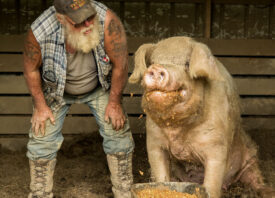
black sheep

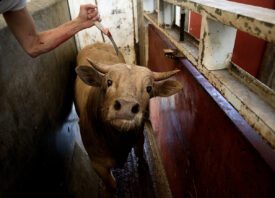
This image is from “Harlem Valley,” a photo series by Danny Ghitis which will be opening at the Recession Art Gallery in Brooklyn on March 9, 2013.

photoville fence

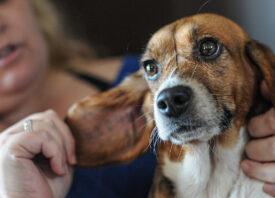
shannon_johnstone_photographyA beagle waits.

In the time it takes for you to read this statement, 15 pets will have entered into life in an animal shelter somewhere in the United States. Ninety percent of these animals are not spayed or neutered. Approximately half will be euthanized.

In North Carolina alone, the state in which I live, every year over 250,000 dogs and cats have to be euthanized because there is no place to put them. That is almost 700 animals every day, which I find shocking and heartbreaking. Although heroic efforts are made daily by animal control officers, shelter employees, veterinarians, and volunteers, they are faced with a Sisyphean task. This series explores the animals and aftermath of this epidemic, focusing on what remains when there are no regulations on breeding, spaying or neutering.— Mary Shannon Johnstone

North Carolina-based Mary Shannon Johnstone has spent the last three years photographing for a state owned animal shelter, one that takes in 40 new animals a day. While the photographs help promote the animals for adoptions, Breeding Ignorance has developed, an ongoing series in which Johnstone captures everyday shelter life of animals awaiting adoption and euthanasia. In this series, she addresses the tragic realities of animal overpopulation in hopes of provoking future change.

Johnstone currently owns six rescue animals and volunteers her time at the Wake County Animal Center and the Ruin Creek Animal Protection Society in North Carolina—both of which are very much in need of donations.

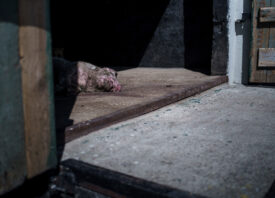
shannon_johnstone_photographyCat carcasses are stored in a walk in freezer until they can be picked up and disposed of.

shannon_johnstone_photographyIt is a myth that animal shelters are filled with mutts.

shannon_johnstone_photographyCats and dogs are anesthetized before they are euthanized. Although the sedation does not hurt, many fight because they are scared.

Kitten anesthetized before euthanasia.Kitten anesthetized before euthanasia.

shannon_johnstone_photographyToo much tail wagging against a hard surface can result in a bloody-tipped tail known as “happy-tail”.

shannon_johnstone_photographyAfter dogs have been euthanized, their bodies are placed into large black plastic bags and their kennels are sanitized.

via Muybridge’s Horse

Liu_Di_Photography

Chinese photographer Liu Di has crafted a powerful series, Animal Regulation, to comment on the conflicting relationship between nature and human society that is a result of rapid urban growth and development. He began formulating the idea when riding on a bus through the crowded streets of Beijing. He recalls wanting to add something to the everyday scenes that would challenge people’s perception. That something was to be Di’s larger than life animals, which he reproportioned on a grand scale, wedging them back into the familiar urban settings.

Animal Reguation defies normality, and that is just what Di was going for—”by violating the rules of common sense, we can break the hypnotic trance induced by familiar reality.”

Liu_Di_Photography

Liu_Di_Photography

Liu_Di_Photography

Liu_Di_Photography

via Muybridge’s Horse

If you’re a photographer, you can now promote your new series, website, gallery show, recent assignment, etc. on Feature Shoot for an affordable price. Find out about becoming a Spotlight Photographer here.

Emma_Kisiel_Photography

At Rest is a photographic series depicting roadkill on American highways and addressing our human fear of confronting death and viewing the dead. My images draw attention to the fact that, while man has a vast impact on animal and natural life, the dominant religion in America insists that animals do not have a place in Heaven and are, therefore, of little value in our society.
Emma Kisiel

Though these images capture animals at varying levels of death and decay, Kansas-born photographer Emma Kisiel has managed to evoke beauty and peace in what would normally be unsightly roadkill. Her constructed memorials, built on location at the site of death, honor the sacredness of the animal and seem to ensure a spiritual journey beyond this life.

Emma_Kisiel_Photography

Emma_Kisiel_Photography

Emma_Kisiel_Photography

Emma_Kisiel_Photography

Emma_Kisiel_Photography

Emma_Kisiel_Photography

Emma_Kisiel_Photography

Daniel Naude

That first powerful moment of eye contact left me speechless and full of emotion. My eyes followed the animal as it trotted off towards the horizon, leaving me behind as the outsider. Confronted by this expression of rebellion, I was struck by how the dog, barely in control but guided by nature, has been a vehicle for mankind’s domination.—Daniel Naudé

Daniel Naudé’s recent monograph Animal Farm is a collection of encounters; supreme moments between man and animal. The book began on a road trip from Cape Town to Mozambique when Naudé experienced a profound encounter with a feral Africanis dog, in which he describes above. He began tracking these feral creatures throughout South Africa, capturing regal portraits reminiscent of formal animal paintings of centuries past. Naudé’s Africanis trek soon morphed into a five year exploration of the country’s land, animal and people.

Throughout the book Naudé balances the wild, feral dog with a myriad of domesticated animals and their owners, a combination that alludes to the spectrum of relationships between man and beast. The pages offer one stunning image after another, each complex and sacred in its own way—much like the country itself. Naudé explores the exchange between man and animal, capturing the mutual fascination and wonder felt on both sides. He draws our attention to the roles we play in nature, and here, the dominator and the dominated seem interchangeable.

Naudé was born and raised in Cape Town, South Africa. Published by Prestel, Animal Farm is a collection of 50 color plates.

Daniel Naude

Daniel Naude

Daniel Naude

Daniel Naude

Daniel Naude

Daniel Naude

At Home With The FurriesZuki, a Gargoyle at home. Zuki lives in Milton Keynes and works in IT. Zuki owns a few suits, the gargoyle is just one of them.

First rule of Fur Club: don’t reveal your identity. Second rule of Fur Club: don’t talk to journalists.

British photographer Tom Broadbent has been getting to know various “Furries” throughout the UK for the last few years. Furries are everyday people, from bank managers to project managers to actors, who dress up in elaborate furry animal costumes and meet up to chat and hang out. Furry groups have been spotted walking around London’s St. Paul’s Cathedral and Millennium Bridge.

At Home With the Furries is Broadbent’s ongoing project, born from a desire to capture the personal, everyday side of their lives without breaking that first Furry rule. Broadbent plans to exhibit and publish this unique series, so keep an eye out for that.

At Home With The FurriesChil, a disco gryphon eats breakfast at home. Chil is a project manager who lives in Brighton with his partner, Red Russell.

At Home With The FurriesAshram, a dragon in his garden. Ashram is one of Zuki’s suits.

At Home With The FurriesBroccoli, a pink boar works in fursuits for a living.

At Home With The FurriesIsaambard Kingdom Brunel is a sheep who lives in Leicester. He works in IT systems.

At Home With The FurriesKreek and Quartermane are a woodland nymph and steampunk lion respectively. They live together in Brighton.

At Home With The FurriesRochelle is a cat. She lives in Leicester

At Home With The FurriesMoon, a deer in her local woods in Sheffield.

At Home With The FurriesTwinkie is a North American Sea Otter and when he’s not swimming and jet-skiiing he likes to go fishing.

This post was contributed by Sophie Chapman-Andrews, Head of Art Buying at McCann London

International Street Photography Awards