Posts tagged as:

documentary photography

Kelly_HS_Alan_Hill_Photography

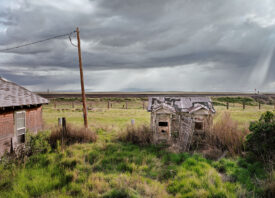
Kelly Hussey-Smith and Alan Hill are two photographers based in Brisbane, Australia. Working individually and collaboratively, they seek to tell stories about the human condition. In Central Queensland Project, the photographers explore an economically powerful region of Australia largely unknown to the outside world.

A significant hub for primary industries, the area is one of the country’s major coal producing regions. In their study of Central Queensland (CQ), the pair was “initially drawn to the unique visual characteristics of the area: cane fields, minescapes, impeccable suburban lawns, and the vastness of the land.” However, they soon noticed CQ to be in a state of transition. A work in progress, this project delves into the realities of this transition, drawing a record of contemporary life in Central Queensland.

Kelly_HS_Alan_Hill_Photography

Kelly_HS_Alan_Hill_Photography

Kelly_HS_Alan_Hill_Photography

Kelly_HS_Alan_Hill_Photography

Kelly_HS_Alan_Hill_Photography

Kelly_HS_Alan_Hill_Photography

Kelly_HS_Alan_Hill_Photography

Kelly_HS_Alan_Hill_Photography

Kelly_HS_Alan_Hill_Photography

Kelly_HS_Alan_Hill_Photography

This post was contributed by photographer Katrin Koenning.

Doug_Ischar_Photography

Marginal Waters, shot by American photographer Doug Ischar in 1985, documents one of the most visible urban gay beaches in North America—on the Belmont Rocks in the city of Chicago—during the height of the AIDS crisis. The images are multi-layered, they “depict a seemingly edenic world of toned, sun-bathed bodies, behind which lurk the spectres of AIDS and reaction.”

Undertow, a three part exhibition featuring Ischar’s Marginal Waters, his installation work of the 1990s, and his recent experimental films, is currently on view at Gallery 44 in Toronto, as part of the Scotiabank CONTACT Photography Festival. It runs through June 15, 2013.

Doug_Ischar_Photography

Doug_Ischar_Photography

Doug_Ischar_Photography

Doug_Ischar_Photography

Doug_Ischar_Photography

Doug_Ischar_Photography

Doug_Ischar_Photography

Doug_Ischar_Photography

Doug_Ischar_Photography

Doug_Ischar_Photography

Doug_Ischar_Photography

Doug_Ischar_Photography

Doug_Ischar_Photography

Doug_Ischar_Photography

Doug_Ischar_Photography

Brian_Finke_Photography

New York-based photographer Brian Finke has a new long-term project in the works entitled Hip Hop Honeys, a document of the models and culture in hip hop videos. Working with casting directors to obtain access, Finke says he is just getting started with the project, seeing what direction it takes—we think it’s safe to say, so far, so good.

Brian_Finke_Photography

Brian_Finke_Photography

Brian_Finke_Photography

Brian_Finke_Photography

Brian_Finke_Photography

Brian_Finke_Photography

Brian_Finke_Photography

Brian_Finke_Photography

Brian_Finke_Photography

Ryann_Ford_Photography
Near Big Bend National Park, Texas

All over the country, rest areas are losing the fight to commercial alternatives: drive-thrus at every exit and mega-sized travel centers offering car washes, wi-fi, grilled paninis and bladder-busting sized fountain drinks. Louisiana has closed 24 of its 34 stops, Virginia, 18 of its 42; pretty much every state in the country has reduced its number of rest areas, or at least cut operating hours. And they’re not just being closed, they’re being demolished.

For the past 53 years, rest stops have given us rest, relief, hospitality and nostalgia. They have been an oasis of green to walk your dog, have a picnic, study the map. We can all relate to rest stops and what they represent as social and architectural icons of Americana. To me though, they are disappearing waysides of memories, anticipation and mystery of what the next one down the road will look like.—Ryann Ford

Austin-based photographer Ryann Ford honors the charm of roadside rest stops throughout the U.S. in her series Rest Stops: Vanishing Relics of the American Roadside. Inspired to systematically document them before they disappear, Ford creates a typological highlight of their architecture, environment, and spirit.

Ryann_Ford_Photography
White Sands National Monument, New Mexico

Ryann_Ford_Photography
Near Burleson, Texas – I-35

Ryann_Ford_Photography
Galveston, Texas

Ryann_Ford_Photography
Walker Lake, Nevada – U.S. 95

Ryann_Ford_Photography
Near Thackerville, Oklahoma – I-35

Ryann_Ford_Photography
Monument Valley, Arizona

Ryann_Ford_Photography
Petrified Forest National Park, Arizona

Ryann_Ford_Photography
Near Abiquiu, New Mexico – U.S. 84

Ryann_Ford_Photography
Juan Santa Cruz Picnic Area – Tucson, Arizona

Ryann_Ford_Photography
Near Augustus, Texas – U.S. 84

Ryann_Ford_Photography
Saguaro National Park, Arizona

Ryann_Ford_Photography
Anthony, New Mexico – I-10 – New Mexico/Texas Border

If you’re a photographer, you can now promote your new series, website, gallery show, recent assignment, etc. on Feature Shoot for an affordable price. Find out about becoming a Spotlight Photographer here.

Graham_Miller_Photography

Austrailian-based photographer Graham Miller combines constructed portraits, documentary street portraits, landscapes and still lifes in a series named after the 1992 Leonard Cohen song, Waiting for the Miracle. Miller explores narratives created through the interplay of these images and the connections made between them. While this results in an open ended and ambiguous experience, the images seem to hold compelling stories within the fictional coastal town Miller has constructed. Miller echoes the words of photographer Robert Adams in his statement, speaking of the young protagonists that “cling precariously but tenaciously to a sense of possibility, hope, and resolve.”

Graham_Miller_Photography

Graham_Miller_Photography

Graham_Miller_Photography

Graham_Miller_Photography

Graham_Miller_Photography

Graham_Miller_Photography

Graham_Miller_Photography

Graham_Miller_Photography

Graham_Miller_Photography

Graham_Miller_Photography

Doug_Adesko_Photography

Brooklyn-based photographer Doug Adesko started his series Family Meal to capture an insight into American family life by documenting families eating together. To date, he’s made roughly 75 portraits over the past decade. His interest arose from early childhood memories, and grew as he watched his own daughter at the family table. The portraits seem simple at first glance, but a second, deeper look presents a subtle range of detail—dynamics among family members, hierarchy within the family group, and glimpses into how personality traits affect the behavior of adults and children when together.

Doug_Adesko_Photography

Doug_Adesko_Photography

Doug_Adesko_Photography

Doug_Adesko_Photography

Doug_Adesko_Photography

Doug_Adesko_Photography

Doug_Adesko_Photography

Doug_Adesko_Photography

Feature Shoot Contributing Editor Carolyn Rauch is the Deputy Director of Photography at Newsweek.

Anthony_Tafuro_Photography

Staten Island, NY-based photographer Anthony Tafuro’s series Gallow follows 21-year-old underground wrestler Jack Gallow through his triumphs and failures. The photos thrive on the drama of the wrestling scene in Staten Island, and the tension surrounding each match is palpable. The fickle crowd cheers for Gallow as he enters the ring, and cheers even more voraciously when he falls. The pure adrenaline of this world is captured in screamingly intense moments of ecstasy or anguish.

Anthony_Tafuro_Photography

Anthony_Tafuro_Photography

Anthony_Tafuro_Photography

Anthony_Tafuro_Photography

Anthony_Tafuro_Photography

Anthony_Tafuro_Photography

Feature Shoot Contributing Editor Matthew Leifheit is an independent writer, curator, and photographer based in New York City.

Zeiss

Olena_Slyesarenko_Photography

This project examines the quickly changing commercial landscape of Ukraine and its impact on the workforce. By moving indoors, into corporate supermarkets and malls, Ukraine is becoming more westernized and homogeneous. The images of street vendors and other small, unlicensed businesses records an element of Ukrainian visual culture as it disappears. Not without irony, the beach portraits capture a black-market economy in the sunshine.—Olena Slyesarenko

Ukrainian photographer Olena Slyesarenko captures a few of her native land’s local vendors—unfortunately a dying breed these days—in her series of portraits, Small Economies: Beach Vendors. A delightful document of various ware and good-toting beachcombers, the work reminds us just what we stand to lose with a move to the corporate world—character, originality, spirit.

Olena_Slyesarenko_Photography

Olena_Slyesarenko_Photography

Olena_Slyesarenko_Photography

Olena_Slyesarenko_Photography

Olena_Slyesarenko_Photography

Olena_Slyesarenko_Photography

Zeiss

William_Mebane_Photography

Legendary photographer Harry Callahan’s routine was to go out and make new photographs every day, whether or not there was anything in particular he wanted to shoot. Adopting this method, Brooklyn-based photographer William Mebane uses his new blog Villeburg as a tool in his photographic process.

A repository for great images that don’t exactly fit into a series, the photos on Villeburg are nonetheless very carefully edited and sequenced—Mebane describes it as “a place where I can share my process with friends and work on editing and pairing photographs that might fit into future projects. It’s an outlet for work that I’ve been making on a daily basis.”

William_Mebane_Photography

William_Mebane_Photography

William_Mebane_Photography

William_Mebane_Photography

William_Mebane_Photography

William_Mebane_Photography

William_Mebane_Photography

William_Mebane_Photography


Feature Shoot Contributing Editor Matthew Leifheit is an independent writer, curator, and photographer based in New York City.

spencer_murphy_Photography

spencer_murphy_Photography

This Kind Of Poverty is London-based photographer Spencer Murphy’s series commissioned by Save The Children as part of their UK child poverty campaign in collaboration with Labyrinth Photographic. Shot in 2012, Murphy worked with children over a period of two days in the Poplar Boys And Girls Youth Club in one of the most deprived areas in the UK, Tower Hamlets in east London. He asked them to write down their thoughts about poverty within the UK—’what is it, and how do you feel about it?’ The resulting series combines Murphy’s portraits with the telling words of the children.

spencer_murphy_PHOTOGRPAHY

spencer_murphy_PHOTOGRPAHY

spencer_murphy_Photography

spencer_murphy_Photography

spencer_murphy_Photography

spencer_murphy_Photography

spencer_murphy_Photography

spencer_murphy_Photography

spencer_murphy_Photography

spencer_murphy_Photography

spencer_murphy_Photography

spencer_murphy_Photography

spencer_murphy_Photography

spencer_murphy_Photography

spencer_murphy_Photography

spencer_murphy_PHOTOGRPAHY

spencer_murphy_PHOTOGRPAHY

spencer_murphy_PHOTOGRPAHY