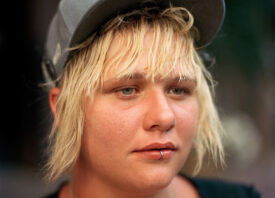
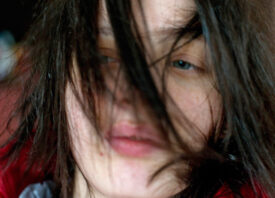
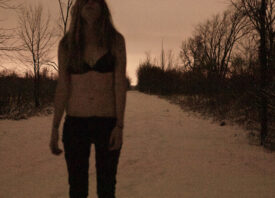
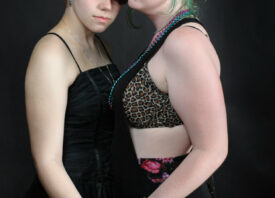
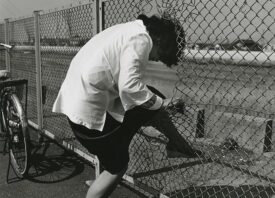
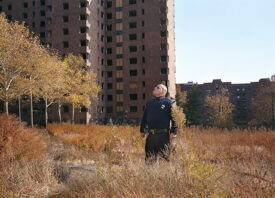
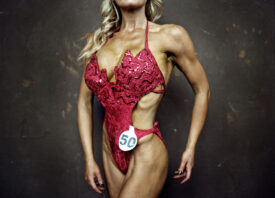
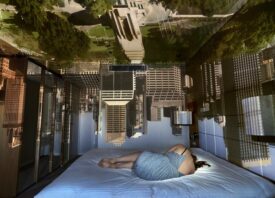
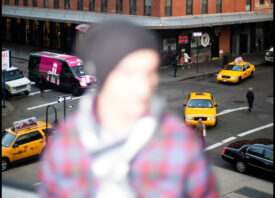
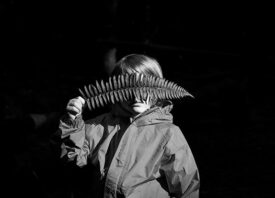
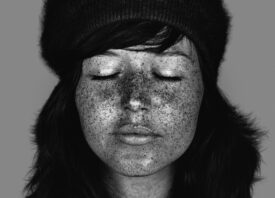
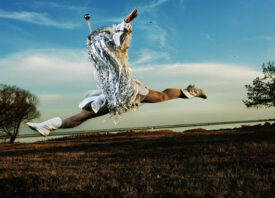
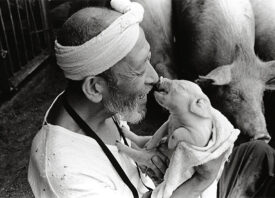
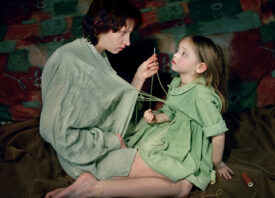
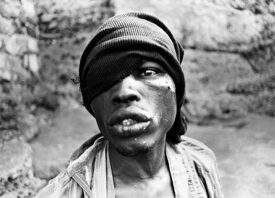
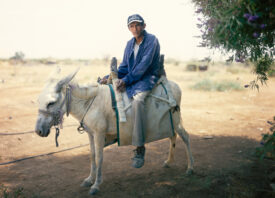
Born and raised in Shanghai, Yijun Liao is a fine art photographer currently living in Brooklyn, NY. Liao’s photographs have been exhibited at L Ross Gallery (Memphis, TN), Medicine Factory (Memphis, TN), Jen Bekman Gallery (New York, NY), Center of Photography at Woodstock (Woodstock, NY), Camera Club of New York (New York, NY), Photography at Center of Fine Art Photography (Fort Collins, CO), Shaluohua Gallery (Beijing, China), China Pingyao International Photography Fest (Shanxi Province, China), and China Lianzhou International Photography Fest (Guangdong Province, China). Her first solo show was at Adam Shaw Studio (Memphis, TN) in 2008.
Posts tagged as:
portraits
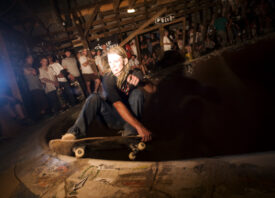
Sebastian Denz studied Architecture at the University of Hanover, Photography and Fine Arts at the University of Applied Sciences, Arts in Hanover, and Photography at the University of Applied Sciences in Bielefeld. Denz was a visiting artist at the San Francisco Art Institute in 2008 and his works are in numerous collections. These images are from his recent book, SKATEBOARDING.3D, published by Prestel.
You teamed up with Carhartt Streetwear for this series. What gave you idea to do this series in 3D, and was your book, SKATEBOARDING.3D, part of the initial plan?
‘I have always been especially interested in the various modalities of “space” as a human system of reference, so after some years of experiments and smaller projects with spatial photography, I decided it was time to work on a more intense project and I really wanted to do a book. I’ve been involved with skateboarding for over twenty years, and from the very start, its subversive element was a welcome alternative to outworn patterns of thought and action.
‘The new patterns and creative strategies I had learned have remained deeply rooted in me to this day — something I’m very grateful for. So I had the idea to provide some deeper insight into the strongly differentiated and codified skateboarding culture. When the project started in 2005, I asked Carhartt to support my work’.
For more than three years, you photographed the Carhartt skate team while traveling across Europe. Can you briefly describe the process from concept to completion?
‘We travelled around with an old Volkswagen Transporter and made four big tours around Europe, as well as some smaller tours in Germany. My friends, Milena Carstens and Alisdair McGlasson, helped and assisted me. Most of the time we slept in the van, even though it was all full of equipment, lights, and cameras. But we had a lot of fun anyway.
‘In some cases, I knew the location before. But most of the time when we met the skaters in the different countries and cities, we had to do an intense location research. Often it took us days to find a place and space which I liked, and sometimes it was very hard to get permission.
‘All the preparation work for the location — the camera-set-up and the shooting itself — took a lot of time. I always pay a lot of attention to detail, and my 3D “Stein” is not the best with which to take snapshots’.
Your friend and custom camera specialist, Dr. Kurt Gilde, built a special 8×10 inch large-format-stereo-camera for this project. What did you need this camera to do that existing cameras on the market were not able to fulfill?
‘According to Vilém Flusser, the person and the apparatus are a functional unit. The apparatus does what the photographer wants to, and the photographer can only do what the apparatus’ program permits. Since I wanted to produce particularly detailed and “informative” pictures — meaning, images that have never been seen before — which would also be three-dimensional images of motion, I had to take the leap to a “meta-program,” which involved making my own apparatus.
‘I had the idea of constructing an “improbable” stereo photography camera that would use 8 x 10-inch sheet film, involve brief exposure time, and would have an adjustable stereo baseline and other special technical features. I’m really happy that my friend Kurt Gilde built this apparatus for me. This unique camera’s program allows me to transform my ideas about individual space and time constellations into “improbable” pictures’.
You photographed the skaters in locations such as sewer systems, forests, and self-made concrete areas. What type of atmosphere were you looking for when deciding upon these locations?
‘One of the implicit themes in SKATEBOARDING.3D is a loss of faith in the natural continuity of the world, which is obviously manipulated through digital processes. This world no longer seems entirely plausible, because when we suspect that something has been digitally manipulated, it takes on an artificial quality, which is not completely artificial, since people continue to believe in its naturalness.
‘Skateboarders are turned into figures that are like avatars in a computer or video game, and yet they seem authentic, too. They appear to exist in hybrid spaces, whose flow of continuity comes to a halt, or whose digital code — like the program mode or state in a computer program — is saved in a kind of savestate.
‘I didn’t want to show the typical skate park next corner, but tried to find locations with a special atmosphere in order to construct these “Postvirtual Spaces,” as I call them. It’s really hard for me to describe that type of atmosphere. I guess, in general, I’m searching for something that’s timeless: classic and modern, simple and complex, concrete and abstract at the same time.’
My favorite photograph in the book is the shot of the skater in the forest. Because of the way the leaves and bushes pop out, I feel like I’m interacting in that space and not just being an observer. How did you decide what to emphasize in the image, and was this determined in the actual taking of the photograph or done after it was taken?
‘Yes, you’re right, there’s a lot of information and spatial depth in this image. I decided to show it as a double-page detail, so, when reading the book, you can get a first impression about the immersive power and suggestive energy of the much larger, life-sized originals in the exhibitions.
‘The decision about what to emphasize in the image is determined in the actual taking of the photograph. But in later steps, when working on the computer, it’s possible to influence the three-dimensional impression of a stereo photograph to a certain degree.
‘I make sure that the visual points around the eyes of the skaters in each of the two halves of a stereoscopic image correspond to each other. And this also means that I deliberately guide the focus away from the most dramatic sort of “3D effect.” It was more important to me that the images — due to an intentionally selected, slight parallactic shift at their optical center — can also function as “two-dimensional images.” Then the viewer can choose between two ways of looking at it: with or without 3D Anaglyph glasses’.
Along with the recently released book, SKATEBOARDING.3D published by Prestel, this work has been on display at Robert Morat Galerie Hamburg, Sara Tecchia New York, Dada Post Berlin and others. How does looking at the work in person differ from looking at the work in a book or online? Is it mainly about scale or does the printing/pixels also influence the experience?
‘The book and the exhibition are two different things. The book is very important to me because it shows the total series of spatial images. The accompanying text gives the reader thoughts and background information about the work. But even though it’s an oversized volume, it’s limited in size and the printing colour-space is also smaller in comparison to the original prints. You cannot compare looking at the work in the book or online to looking at it in the exhibition.
‘I’ve seen many visitors to my shows react to the large images with very strong emotions. As you described, they are interacting in that space and immersing themselves in the spatial picture. This pull is especially strong in the highly detailed, sculptural 3D photographs in the exhibition.
‘In my opinion, the images create a permanently intriguing conflict that is communicated to the viewer. By deliberately putting on the 3D glasses, the viewer closes himself off from his environment. His field of vision is concentrated. His perception is intensified, and the 3D glasses enable him to eliminate the veiled, vague areas, to clarify the visual space and keep decoding it.
‘The glasses make it possible to see through a “pseudo-window,” giving the viewer access to another space. This space has magical potential — it has suggestive energy, exercises power over the viewer, and temporarily undermines what the German art historian and media theorist Oliver Grau, in his book Mediale Emotionen, calls the “internal, psychological ability to create a sense of distance. In the process, “consciously experienced illusion [can] transform into the subconscious sort and give the illusion the appearance of reality.” The power of the effect, though, fades away all by itself, and then the viewer has an opportunity to create a sense of internal distance, and start thinking again.
‘For me, this moment of immersion — of being completely inside the picture — and the impression this moment makes on the viewer are of crucial significance. Not only are the boundaries between the viewer’s side of the space and the three-dimensional space beyond temporarily dissolved, but in addition, the pictures themselves can, for a short time, look so “real” that they then seem totally artificial again. They convey a sense of “real hyperreality” — a Postvirtual Space’.
Win a copy of Sebastian Denz’s new book, SKATEBOARDING.3D, published by Prestel. To enter, be a Feature Shoot Facebook fan and leave a comment on our Facebook page with your favorite photographer and the city you live in.
Alecia Neo graduated from the Nanyang Technological University, School of Art, Design and Media with a major in Photography and Digital Imaging. With a great love for people and cultures, her work is often about common human experiences of alienation and loneliness, dislocation and belonging, and the search for self. Portraiture is the main focus of her work. Her latest body of work, Home Visits has received a Honorable Mention in the 2009 Berenice Abbot Prize by juror Tim B. Wride, Curator of the Department of Photographs at the Los Angeles County Museum of Art. Presently, she is working on a collaborative book project on Paralympics.
What motivates you to take up photography as your first degree, a course that’s decidedly different from the mainstream in a pragmatic environment like Singapore?
‘I’ve always been a visual person, learning faster and more instinctively through images and making things. When I had to decide what journey to take academically, I chose art school. The decision was made easy by the support of my parents, who believed that learning can only be hastened by interest. I decided on photography, even when I started out not able to expose properly. As naïve as it sounds today, following my gut has been the best advice I‘ve been given’.
Let’s talk about Paradise Lost, the exhibition to which you have contributed some works. Paradise Lost is about conformity, truth, fiction, and reality in life. How do your photographs reflect the theme?
‘For Paradise Lost, I contributed a few images from my series, Home Visits. Often, Singapore is closely associated with the new, malleable youth, its limitations, and horrifyingly, its monotonousness. There seems to be an uncomfortable tension within the Singaporean identity that is torn between conforming to the rapid changes in expectations of its society and holding on to its history.
‘My work reveals a side of Singapore that is familiar, yet not completely embraced in a country that is constantly renewing and upgrading itself. I photograph people in the neighborhood that I grew up in. Being one of Singapore’s oldest housing estates developed by the government’s public housing authority, Queenstown is populated with curious characters. The homes depicted in my images are often small and messy, and we are given clues about the sitters’ backgrounds through their possessions. In their homes and workplaces, they appear as they are, unpolished and charming. My camera operates as a kind of license.
‘The people I photographed have given me a great gift by allowing me to photograph them, and while photographing, I often find myself in the midst of discovery’.
What are some of challenges you face having to take photographs of people in their most private space? Any lessons you have learned in the process?
‘Photographing strangers is difficult because they have no reason to allow you that access. However, I realize that once they are agreeable, photographing people in their homes makes the session more personal and comfortable. One of the participant’s mother was finally convinced to be photographed too, after which she began sharing so much of her own stories, bringing out old photographs. I asked her why some of the people were cut out from the photos and she revealed that it was a custom to cut out people who had passed on. That is what I enjoy the most about photographing – the exchange of lives. Even though you can never get a complete picture of a person through their portrait, the camera is a very revealing tool. It often reveals the unexpected’.
In addition to your portrait and documentary work you also shoot a good deal of fashion. Is this due to commissions or mainly for fun?
‘When I first started working on a fashion portfolio, I did the work to get work. Fashion allows me to practice technique, experiment with ideas and it also helps to formulate a style, which fed into how I made my personal projects. It is also a great way to get to know people, and I enjoy seeking out models that are different and who are very aware of their bodies. Most recently, I worked with a fellow photographer, Samuel Woo, on a couple of commissioned projects that involve collaborations with hairstylists’.
Can you talk about some of the more interesting commissions you have received and what you look forward to working on in the future?
‘I got to photograph Member of Parliament, Seng Han Thong, for a Singaporean magazine feature. Mr Seng had been attacked and set on fire while on duty, and is still in the process of recovering from burns. In spite of all the controversy about the case, I found him humble and positive, in spite of his age. I’ve always found it interesting to observe a person who is undergoing some form of healing, whether physical, mental or emotional. I took a picture of him engulfed by white curtains, which I felt was very symbolic of this vulnerable period that he was going through’.
Mat Szwajkos specializes in entertainment, fashion and portrait photography. He received his BFA from Pratt Institute in 2001 and began covering celebrity events in New York City and Los Angeles. Through his access to high profile events, Mat has built good relationships with actors, musicians and fashion designers. His clients include Steven Alan, The Daily, Muscle and Fitness, MTV, TV Land, Victoria’s Secret, Tribeca Film Festival, and Atlantic Records.
You’ve been photographing celebrity-laden events for Getty Images for a few years now. What made you decide to embark on this series of up close celebrity portraits?
‘I started shooting this project in February 2007 while covering Mercedes Benz Fashion Week in New York City. I was shooting backstage as the house photographer covering the beauty, first looks and celebrities. It was my seventh season backstage and I wanted to do something new and different. I felt as if I was making human product shots: position designer, add celebrity or model, click. Over and over. I recognized the trust I had built with everyone over the past seasons and the power I had to control the situation. I began to shoot the models close up, then the designers and then the celebrities. I fell into a groove and started to capture intimate portraits in the chaos. I was putting the barrel of my lens 6-8 inches from the subject’s face. The images became fast, fleeting, and intimate moments. Some of my subjects I had been working with over and over and some I met right before I took their portrait’.
Celebrities are usually very protective of their image and wary about having their photo made. How have you been able to get them to agree to an unretouched portrait and what is the turn down rate?
‘When I started shooting the project, it was a bit hit or miss. After the first couple months shooting everyone that would let me, I figured out how to approach the talent and have them agree to the portrait. I first introduce myself and explain the project and that I am (usually) the house photographer. Then I tell them that I am working on a group of close-up portraits at events and that I would like to do one of them. If they say yes, I show them with my hand in front of my own face how close the lens is going to be. Out of the hundreds of people I have asked, only a few have actually said no. I have photographed close to 400 people this way in two and a half years. Almost all of the women I have photographed for this project have had their make-up done before they arrived at any of the fashion shows, parties, concerts or private events. The guys usually have had a stylist work on them as well. I am capturing these portraits in an editorial environment and want to keep them that way. You get to see how celebrities are just like us. They have bad hair days, tired eyes, and, yes, blemishes on their chins. We all do. I am not trying to show anyone in a bad light. I am only trying to show them how they are.
‘They are just records of each person on a given day. Like any portrait session, not every frame is perfect. I only shoot up to three frames at a time. All of my subjects have put trust in me to make them look good. And as any good photographer will do, I only show my best work.
‘I’ve been lucky enough to photograph a few people over and over. It is all about how I approach them. I always start with a smile and a hand shake, then ask for the portrait. It usually is over within two minutes from when I introduce myself to when I say thank you. I know its going to be a good shot if I can see the subject is already excited to be there. I’ve figured out when to ask and when to let them be. I think that’s why I’ve been able to get so many people to allow me to photograph them so closely’.
Can you tell us about your favorite celebrity from this series and what your memories are of shooting him or her?
‘This is the toughest question I always get about this series. Whenever anyone asks me this, I usually ask them “who is your favorite of the series that you have seen?” Then I tell them the story about that image. I can remember almost every single portrait and where it was taken. My favorite one right now is the one of Anthony Kiedis from the Red Hot Chili Peppers. It was taken in LA last Spring at the Alexander McQueen store opening party. I walked in the door and Anthony was on his way out with producer Rick Rubin. I stopped Anthony and asked him for a quick portrait. He agreed and I shot two frames. We talked for a minute and I showed him the shot and he liked it. We turned to Rick and I asked Rick to let me shoot him as well. I ended up shooting a few portraits that night including Anthony, Rick and Janet Jackson’.
What equipment are you using?
‘I am using a Canon 1D MK3 with a 17-40mm lens and a 580ex2 speedlight. I shoot them as RAW files in black and white’.
You have been shooting this series for a few years now. What are your plans for this work?
‘I am working on a photo book. I would love to publish it in the next year. I am looking for a publisher and am open to have people contact me about it. The edit right now is around 150 images’.
Daniel Augscholl was born in 1985 in a small town in the middle of the Alps. His work has been featured in several publications. He is also founding member and editor of Ahorn Magazine, an online publication about contemporary photography. These works are from his latest series, “Celestial Planisphere”.
Jen Davis lives and works in New York City. She received her MFA from Yale University, and her BA from Columbia College Chicago. Her work is an honest and poignant look at self-image and isolation. She currently has a solo show at the Indianapolis Museum of Contemporary Art.
Livia Corona was born in Ensenada, Baja California, Mexico. In 2001 she received a BFA from Art Center College of Design in Pasadena, California. Corona recently published Enanitos Toreros (powerHouse Books, 2008). The book — with photographs, interviews and design by Corona — is a ten-year documentary on the personal and professional experiences of people with dwarfism who work as the famed Dwarf Bullfighters of Mexico. Currently, Corona is working on a feature film documentary about the Enanitos Toreros and the slowly evolving identity of dwarfism in modern society. Her follow-up photographic project, “Two Million Homes for Mexico,” is a long-term study that reflects on the experience of the individual within the massive tract home developments that are redefining notions of home and community for millions of people in Mexico. In 2008, with this project, Corona was winner of the Architecture Category of the Sony World Photography Award in Cannes, winner of the Architecture Category of the Paris Prix de la Photographie, a finalist for ING’s REAL Photography Award in Rotterdam, a nominee at the Lucie Awards for the “International Photographer of the Year” prize in New York, and a nominee for Mexico City’s XIII Bienal de Fotografia.
Mathew Scott was born and raised in Portland Oregon. At age 21 he moved to San Francisco, where he eventually went to school, and in 2006, he graduated with a BFA in Photography from The Academy of Art. Whether in landscape or portraiture, his camera brings into focus the paradoxical tensions existing just under the surface of everyday life. The juxtaposition of two Americas-the urban and the rural-overlap (and compete) in his photography, as startling images elicit a struggle of dualities. With a throw away gesture, he gives us Yin and Yang, light and dark, compassion and sarcasm. A dilapidated limo sits in the driveway of a gaudy pink house. Under a sky flooded with birds he seizes upon the irony of graffiti painted on the back of an abandoned shack. Mathew currently lives in LA, where he continues to impart truths that to a lesser eye would go unnoticed.
You have assembled quite a cast of characters on your website. For your personal work, what initially draws you to a subject?
‘The people I choose to photograph range from strangers, to friends, to friends of friends. The one thing they all have in common, is they are photographed how I found them. I rarely go anywhere without my camera, and I often spend days just wandering around. what draws me to a subject is where it gets a little complicated, I honestly cant explain why I am drawn to certain people. I see a lot of people everyday, and sometimes I just get an uncontrollable urge to photograph a particular person. I have learned to stop trying to figure out what makes that happen, instead.
‘I just turn off the analytical part of my brain, and just let everything unfold naturally. For me, this approach gets the real person to come out. I don’t talk much when I am shooting, and If someone feels uncomfortable in-front of my camera, than thats who they are, and I like that. I feel this is how I can build a body of work that can be described as characters, instead of portraits’.
Can you talk a little about how you became involved with Veer and how that process works?
‘I signed with Veer when I was in my last year of College. I was interested in shooting stock, so I started researching stock agencies, and I came across Veer’s website. Most stock is really cheesy and safe… old people at the beach, office settings… etc. Veer had a couple of sections that I felt where a little more interesting than the run of the mill stock photos, so I submitted some of my images, and about a month later, i was signed. I rarely set up shoots for stock, I just make it a habit to carry around model releases with me, and if I get a shot I like, I stick it in a folder, and when I get enough images in that folder, I make a submission. I do have a goal this year of shooting more specifically for stock, I really enjoy the creative freedom if gives me, your basically giving yourself an assignment, and it really makes you use your head when trying to conceptualize an idea, and figure out how to make it work for a “commercial” audience. This can be fun and frustrating at the same time’.
What camera are you using?
‘At the moment a Hasselblad 500cm, Mamiya 645 Pro, and a Canon 5D’.
You have just moved from San Francisco to Los Angeles. What kinds of changes has this brought work-wise?
‘Work-wise, it has been a very positive move. There is a lot more going on down here… not that SF doesn’t have things going on as well, its just a simple fact of the size of LA. There is a lot more editorial assignments to shoot here, and that has been good. I am currently working on a pretty large marketing campaign right now, so in a few months, I will see what LA really has in store for me. As far as my personal work goes, its always refreshing to relocate. It gives me new places to explore, and in turn, gets my brain going. Being somewhere new gets me inspired to start working on new projects, or continue ongoing projects that may have been on hold for a while’.
Allison Michael Orenstein’s love of photography dates back to age thirteen, when she used her hard-earned babysitting income to buy her first camera. Her passion for the form inspired her higher education, and she earned her BFA in photography from the University of Delaware, in 1998. Thereafter she relocated to New York, and began her career in the studio of the architectural photographer Chun Lai. Allison worked as a studio manager and photo assistant for seven years, all the while continuing to work exhaustively on personal projects. In 2005, she began shooting professionally. Her editorial clients include Fortune Small Business, Real Simple, Smart Money, Fitness, and Bust. Her work has also appeared in New York Magazine, the Wall Street Journal, Elle, and Time Out New York. In addition to her editorial work, Allison continues to experiment, whether it’s documenting her travels around the globe (especially on the high seas) or pursuing various long-term photo projects.
Where do you find your subjects for your personal portraits, and what are you looking for in a model?
‘For my most recent project featuring portraits of “creative types†i.e. musicians, performance artists, dancers, comedians, actors, etc. I started with people I knew and then my need for models spread like wildfire through referrals. There are so many creative people who need photographs so I felt it was a great exchange. Everyone gets pictures, everyone is happy.
‘I live in Williamsburg and when I see someone interesting looking at a restaurant, on the street, or on the subway I sometimes approach them and ask if I can take their portrait. I look for people with something fascinating about them. I don’t know exactly what it is; something about the way they look, their face, eyes, personality, attracts me to them. My subjects for my couples project were found the same way, through people I know, then word of mouth.
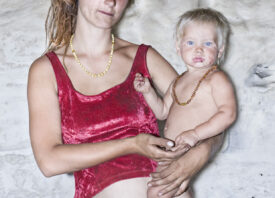
‘The project on my wife Simone started when we were first dating six and a half years ago. We took a trip to California after being together for only three months. I photographed her alone and with three best friends. This is the photo of the two women featured here. It’s great to photograph Simone because we travel a lot together so I always have a model available’.
You were a studio manager and photo assistant for seven years. How did you make the transition to professional photographer?
‘I was a studio manager for the first three years. It was great because it taught me the business side of photography. Then I learned the technical side by assisting for four years. I made the transition by gradually getting more shooting jobs and saying no to assisting jobs. The criteria for jobs I would say yes to assist on became more strict. I would only say yes to jobs in New York so I could be here if I got a call for a shooting job. I would only work for photographers who were nice and paid well and paid in a timely fashion. In 2006 I signed a contract with Getty Images. I saw this as a way to transition as well. It has worked out really well to have a monthly paycheck’.
You shoot a lot of editorial work, but contrast that with a number of experimental personal projects. What do these disparate styles bring to each other?
‘I don’t think there is a huge difference between the two. Sometimes with editorial a certain direction has to be taken from the assignment point of view and it comes out more as illustration or documentation but for the most part I try to make beautiful portraits of people’.
Your portrait series contains a number of highly intimate shots. Was it difficult getting your subjects to feel relaxed in front of the camera whilst opening themselves up so much?
‘I think my shoots are a pretty fun and relaxing experience. Of course there are those who hate to be photographed, so I try to ease the pain of it by having a good time. I like to play music, I used to DJ, so now I DJ for my shoots. It depends on who I am photographing but most people just need time to ease into it and open up. The more time I have with someone the more authentic the photograph becomes. I have the time to get to know them better and they get the time to trust me and be in the moment. That’s also why I like to photograph people more than once. Each time we both open up a bit more and let ourselves be a little more vulnerable’.
Ted Sabarese’s personal and fine art work have won critical acclaim and have been exhibited in galleries in both the U.S. and abroad. This exposure compliments his many commercial advertising and editorial assignments and awards. He is repped by Josette Lata.
Your advertising, editorial, and personal work have a similar aesthetic while serving different purposes. Is there anything you change about how you shoot when photographing advertising as opposed to personal work?
‘Thank you for the compliment. I think if you look at my body of work, there are a couple, constant elements that have helped to define my aesthetic. Casting and composition. I enjoy shooting individuals who don’t necessarily conform to the typical definition of beauty. People with physical idiosyncrasies and arresting, quirky personalities pique my interest at castings. When one comes along, I start to get really excited and know I have the basis for a provocative image. Compositionally, I tend towards simpler, more graphic setups that allow the talent (and subsequent story) to be hero. I don’t like clutter. I’d rather subtract props than add them to an image.
‘So, to answer your question, I try to do most of the same things whether I’m shooting advertising or fine art. Find a great cast and use a light, thoughtful touch on art direction. For ad jobs, I enjoy working together with the creative team and client. And taking into consideration all of their concerns. When you’re more collaborative, the shoots run smoother, people are happier and you usually finish in a better place. Lighting may vary slightly, also. Many advertising clients are looking for a cleaner, punchier look, but I’ll try to add a bit of moodiness whenever I can’.
You’ve had a few careers before settling on photography. What were the steps you took that enabled you to make a successful transition?
‘Luckily, all of my previous careers, one way or another, contributed to making me a photographer. Teaching college English and creative writing honed my storytelling abilities. Graphic design helped cultivate my visual sensibilities. Working on the creative side in advertising not only made me a more conceptual thinker, but also got me looking at talented photographers’ books and participating in photo shoots, where I watched like a student. During this entire “advertising†period, I was taking photography classes at the New School. Without my advertising background, the transition to professional photography would have been much more challenging. Plus, I have an insider’s understanding of all the different types people involved in the production process—creatives, account execs, art buyers, clients, etc.—and can empathize with all of their individual concerns. That’s proved particularly invaluable’.
There is a definite sense of humor about your work. How did you gravitate towards this style of photography?
‘The sense of humor you see in my work is a pretty close approximation to my own. I’m no ha-ha funny comedian. I’m one of those people who can be quietly amusing, if you’re listening well. I prefer my comedy on the subtle side, whether it’s in photography, film or fiction. After years of experimenting with different styles of photography, I learned that’s it’s always easiest (and best) to do what comes most naturally to you’.
You have many awards under your belt. Do you feel that you have been commissioned for jobs directly from this recognition?
‘Awards certainly don’t hurt, but I don’t know that I’ve ever been awarded a job solely because of them. When my book gets called in for a specific project, the people looking at it may recognize more of the award-winning work. They may be impressed to see my list of achievements. All of this helps on some, maybe subconscious, level, but the portfolio still has to wow them and demonstrate the exact style of photography they’re looking for. That said, I continue to enter all the major shows, every year’.
Do you always carry a camera around wherever you go? If so, what or where do you find yourself photographing most often?
‘I used to carry a film camera with me at all times. Literally. At work, in restaurants and bars, around the city, in church, in the subway, in the bathroom. My friends couldn’t stand me, but I always wanted to be armed and ready for whatever visual possibilities New York threw at me. I took a lot of black and white street photography, party snapshots and liked to give myself projects to work on (I still have a wall of images showcasing close-ups of people’s open mouths). I think there came a point where I got that all out of my system. Nowadays, I do sometimes carry around a Canon G9 and fill up the memory card with pics of my 20-month-old daughter’.