Posts tagged as:

architectural photography

Ryann_Ford_Photography
Near Big Bend National Park, Texas

All over the country, rest areas are losing the fight to commercial alternatives: drive-thrus at every exit and mega-sized travel centers offering car washes, wi-fi, grilled paninis and bladder-busting sized fountain drinks. Louisiana has closed 24 of its 34 stops, Virginia, 18 of its 42; pretty much every state in the country has reduced its number of rest areas, or at least cut operating hours. And they’re not just being closed, they’re being demolished.

For the past 53 years, rest stops have given us rest, relief, hospitality and nostalgia. They have been an oasis of green to walk your dog, have a picnic, study the map. We can all relate to rest stops and what they represent as social and architectural icons of Americana. To me though, they are disappearing waysides of memories, anticipation and mystery of what the next one down the road will look like.—Ryann Ford

Austin-based photographer Ryann Ford honors the charm of roadside rest stops throughout the U.S. in her series Rest Stops: Vanishing Relics of the American Roadside. Inspired to systematically document them before they disappear, Ford creates a typological highlight of their architecture, environment, and spirit.

Ryann_Ford_Photography
White Sands National Monument, New Mexico

Ryann_Ford_Photography
Near Burleson, Texas – I-35

Ryann_Ford_Photography
Galveston, Texas

Ryann_Ford_Photography
Walker Lake, Nevada – U.S. 95

Ryann_Ford_Photography
Near Thackerville, Oklahoma – I-35

Ryann_Ford_Photography
Monument Valley, Arizona

Ryann_Ford_Photography
Petrified Forest National Park, Arizona

Ryann_Ford_Photography
Near Abiquiu, New Mexico – U.S. 84

Ryann_Ford_Photography
Juan Santa Cruz Picnic Area – Tucson, Arizona

Ryann_Ford_Photography
Near Augustus, Texas – U.S. 84

Ryann_Ford_Photography
Saguaro National Park, Arizona

Ryann_Ford_Photography
Anthony, New Mexico – I-10 – New Mexico/Texas Border

If you’re a photographer, you can now promote your new series, website, gallery show, recent assignment, etc. on Feature Shoot for an affordable price. Find out about becoming a Spotlight Photographer here.

Nicholas-Alan-Cope_Photography

Los Angeles-based photographer Nicholas Alan Cope shoots architectural subjects as abstract still lifes. For the buildings he shot in Los Angeles (made into a book called Whitewash, published by PowerHouse Books), he strips all detail from the structures, leaving portraits consisting only of lines, planes and shapes. The intense, black-and-white images provide a fresh and simplified view of everyday structures in a sprawling, complex metropolitan city.

cope

Nicholas-Alan-Cope_Photography

Nicholas-Alan-Cope_Photography

cope

Feature Shoot Contributing Editor Carolyn Rauch is the Deputy Director of Photography at Newsweek.

Luigi_Bonaventura_Photography

Behind the Edge showcases hotel facades in Jesolo Beach, Venice. Shot by Italian born, New York-based photographer Luigi Bonaventura, his intention is to show each structure as its Platonic ideal—as the architect imagined it. The repetitive forms and pops of color combine to create a graphic, eye-pleasing series.

Luigi_Bonaventura_Photography

Luigi_Bonaventura_Photography

Luigi_Bonaventura_Photography

Luigi_Bonaventura_Photography

Luigi_Bonaventura_Photography

Luigi_Bonaventura_Photography

Luigi_Bonaventura_Photography

Ward_Roberts_Photography

We move along the arrow of time as stationary observers, watching the world transform before our very eyes, yet rarely aware of our transition into ‘the future’. Billions removes us from this stationary reality for a brief moment, lifting us to the surface for air. From this detached place, these images allow us to see our world, yet we feel neither comfortable nor uncomfortable about it. In our times, the concept of a ‘billion’ no longer overwhelms us. We now recognize a new kind of whole. It is a work that allows you to recognize your world and your place within it.—Ward Roberts

Billions, a series by Melbourne-based photographer Ward Roberts, captures the energy of bustling, urban Hong Kong in his boundless, twinkling captures of light, pattern and form. Each image is an intriguing world of its own, full of possibility, wonder, and begging for exploration.

Ward_Roberts_Photography

Ward_Roberts_Photography

Ward_Roberts_Photography

If you’re a photographer, you can now promote your new series, website, gallery show, recent assignment, etc. on Feature Shoot for an affordable price. Find out about becoming a Spotlight Photographer here.

Michael_Wolf_Photography

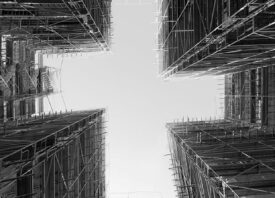
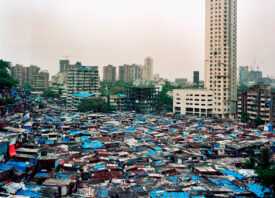
There is something utterly fascinating about German-born photographer Michael Wolf’s Architecture of Density. Hong Kong, Wolf’s adopted city of fifteen years is home to seven million people and Wolf’s images ponder contemporary urban life in one of the most densely populated areas in the world. The structures are mesmerizing and the monolithic facades play tricks on your eyes until you eventually realize that all those tiny little windows are the markers of people’s homes. We found his scout shots, featured here, especially interesting.

Michael_Wolf_Photography

Michael_Wolf_Photography

Michael_Wolf_Photography

Michael_Wolf_Photography

Michael_Wolf_Photography

Michael_Wolf_Photography

Michael_Wolf_Photography

Michael_Wolf_Photography

Michael_Wolf_Photography

Michael_Wolf_Photography

Michael_Wolf_Photography

via Fstoppers

paris-tour-eiffelEiffel Tower, Paris

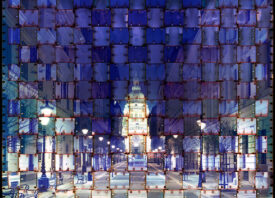
German photographer Thomas Kellner has been producing large-scale works that piece together monuments, palaces, museums and landmarks in a signature style that he has been perfecting for years. There is a method to these intricate fragmentations; they are made up of horizontally placed film strips that include an incredible number of individual photos side by side. Each photo was shot through the camera in a way that varies slightly from the next. Kellner’s film strips become the new capture; a new image all together that he then makes a contact print out of.

Kellner reminds us of the craft in meticulous and creative process, supplying us with undulating reconstructions that we can’t help but see with kaliedoscope eyes.

london-big-benBig Ben, London

Thomas-Kellner1Golden Gate Bridge, San Francisco

paris-notre-dameNotre Dame, Paris

Thomas-Kellner1The Cathedral of Brasília, Brazil

Thomas-Kellner1Tower Bridge, London

photoville fence

Cameron_Wittig_Photography

A lot of my personal work plays with perception and how photography is often presumed to be 100% honest when in reality it can be easily manipulated to lie. If you use it correctly, it is just as good as telling untruths as it is truths.—Cameron Wittig

Duluth Typologies is Minneapolis-based photographer Cameron Wittig’s capture of common midwestern homes characteristic of Duluth, Minnesota. The series’ title is a play on Bernd and Hilla Becher’s typologies of industrial German architecture. Wittig has come up with his own systematic classification of structures by taking these houses built on steep hills and changing the perception of their form. He acheives this with a tip of his camera, squaring the sidewalk with the bottom of the frame.

Cameron_Wittig_Photography

Cameron_Wittig_Photography

Cameron_Wittig_Photography

Cameron_Wittig_Photography

via The Typologist

Laura Barisonzi

New York-based photographer Laura Barisonzi’s recent project explores an abandoned greenhouse complex in Santa Barbara County that sits on a patch of isolated private property that meets the Pacific Ocean. It was originally the greenhouse site for an orchid company that was responsible for introducing orchids as houseplants in the US in the 1940s.

The complex was recently discovered by the federal government to be the site of a major marijuana growing operation that was estimated to have a street value of 35-80 million dollars. The growers are now in prison, and the greenhouses sit quietly abandoned on the private property. Barisonzi captures the remnants of these intricate, light-soaked spaces that consequently housed more than one kind of greenery in their day.

Laura Barisonzi

Laura Barisonzi

Laura Barisonzi

Michael Wesley

When you hear the term “long exposure”, you probably don’t expect it to mean a long exposure process that takes 2-3 years to complete. But in the case of Berlin-based photographer Michael Wesely, a long exposure photo is quite a time commitment. With the help of different filters and an incredibly low aperture setting, Wesely captures the changing scenery of a city scape under construction. Open Shutter seem to literally capture time in these photos documenting the huge facelift undertaken on the MoMA between 2001 and 2004.

Michael Wesley

Michael Wesley

Michael Wesley

Immo-Klink photography

Immo Klink has an on-going project about European communities who choose to live differently from the rest of us; namely whose aim is to keep their demands on the environment to a minimum. These extraordinarily inventive structures nestle beautifully in the landscape, some being completely camouflaged.  Immo’s work also lends a fragility to these dwellings, serving as a reminder to us all that we can’t control the elements no matter how great or little our impact is on our environment.

Immo-Klink photography

Immo-Klink photography

Immo-Klink photography

Immo-Klink photography

Immo-Klink photography

This post was contributed by Sophie Chapman-Andrews, Head of Art Buying at McCann London.